
Reviews of Expedition Cruises to Antarctica: Top Picks
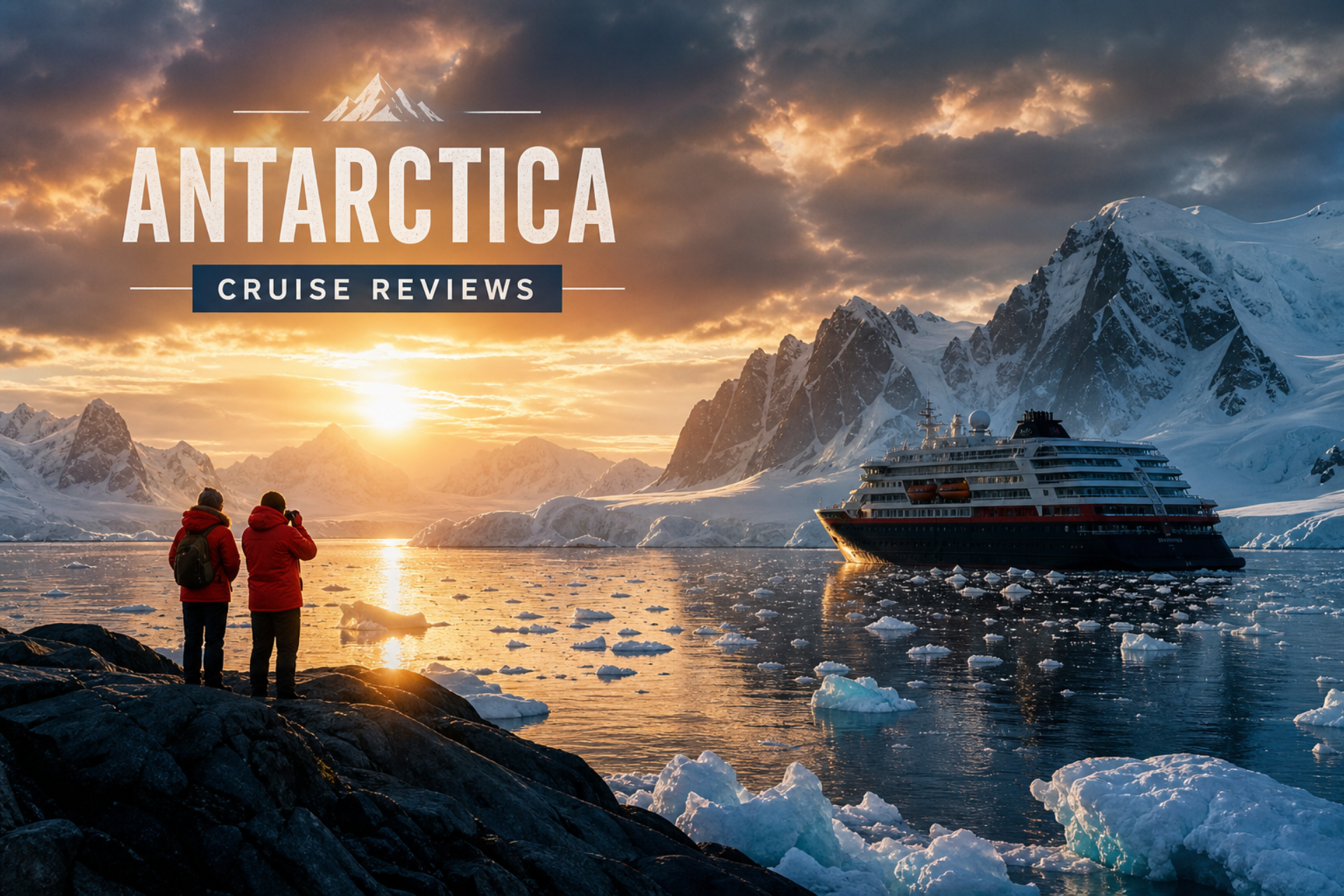
There is a particular kind of traveller who researches Antarctica for two years before booking anything. They read every trip report, download packing lists at midnight, and carry a quiet suspicion that no destination on earth could possibly justify what they're about to spend. If you're looking for reviews of expedition cruises to Antarctica, this article was written for you, because Antarctica, of all places, rewards the person who goes in fully informed and absolutely devastates the one who doesn't.
Drawing on passenger ratings, operator data, and Antarctica expedition cruise experiences from recent seasons, what follows is a practical guide to the operators, ships, costs, wildlife windows, and honest pain points that define a polar voyage. At Skylord Cruise and Holidays, we handle Antarctic enquiries from UK travellers regularly, and the same questions come up every time: who to trust, what to expect, and whether the trip will actually deliver. This review roundup was built to answer all of them.
Reviews of expedition cruises to Antarctica: how ship size shapes your experience
IAATO, the International Association of Antarctica Tour Operators, restricts the number of passengers that can be ashore at any single site at one time to a maximum of 100. Ships carrying more than 500 passengers are prohibited from landing entirely. This single rule, more than any other factor, explains why ship size is not just a comfort question in Antarctica, it directly determines how much time you spend on the ice.
Small ships under 200 passengers can cycle their full passenger complement through a landing site in far less time than a larger vessel, and they gain access to remoter, more sensitive sites that bigger ships cannot reach. Budget-class small ships such as MV Ushuaia and MV Ocean Nova run between $5,000 and $10,000 per person. Cabins are functional and amenities are minimal, but the expedition access and landing frequency are genuinely excellent. These ships suit adventure-first travellers who measure a successful day by how long they spent among penguins rather than by the quality of their dinner.
Mid-size expedition ships carrying 150 to 250 passengers in the $10,000 to $20,000 range offer a credible middle ground: fitness centres, expert lecture programmes, and consistent Zodiac landing schedules. Luxury ships like Silver Endeavour push into the $20,000 to $30,000-plus range and bundle butler service, gourmet multi-restaurant dining, and fly-cruise options that bypass the Drake Passage entirely. The real question passenger reviews of Antarctic expedition cruises raise is a useful one: are you paying for the ship or the ice? The honest answer is both, and deciding which matters more to you is the clearest path to picking the right ship class.
Operator reviews of expedition cruises to Antarctica, who leads the field
The Antarctic expedition market is competitive, but passenger satisfaction data from recent seasons reveals clear leaders. These operators are not interchangeable; each has a distinct philosophy, and that philosophy shapes every landing, lecture, and meal from Ushuaia to the Peninsula.
Seabourn and National Geographic-Lindblad: the two names that keep topping the charts
Seabourn scores 98.18 out of 100 in the Condé Nast Traveller 2025 rankings, placing it among the highest-rated luxury expedition operators in the world. Passengers posting on forums like Cruise Critic repeatedly praise the operator's elite expedition teams, on-board kayaking infrastructure, and access to six-person submarines that open up wildlife encounters most ships simply cannot offer. What separates Seabourn from other luxury operators is the sense that every shore excursion has been curated rather than assembled.
National Geographic-Lindblad earns the top Consumer Reports satisfaction rating despite carrying the highest price tags in the market. What passengers pay for is clear: a naturalist-led, education-first experience that genuinely feels different from standard luxury cruising. In review after review, the quality of the onboard scientists, marine biologists, and photographers stands out as the defining feature of a Lindblad voyage. If you want to understand what you're looking at in Antarctica rather than simply photograph it, Lindblad delivers a rigorous and immersive experience.
Viking and Silversea: where five-star comfort meets polar ambition
Viking Octantis and Polaris, both built in 2022 and each carrying 378 passengers, score 98.11 out of 100 and draw experienced cruisers who want premium all-inclusive fares without children or casinos. The ships are modern, beautifully appointed, and well-suited to travellers who prioritise onboard quality as much as shore time. Passengers note that the size, while larger than true expedition vessels, is managed carefully through IAATO-compliant landing rotations.
Silversea's Silver Endeavour, carrying 200 passengers with a 1:1 crew-to-passenger ratio, earns strong praise for butler service, 24-hour dining across multiple restaurants, and a hull that handles rough polar waters with what passengers describe as remarkable composure. There is one honest caveat that surfaces across Silver Endeavour reviews: weather-driven itinerary changes are not always communicated transparently in advance. Antarctica always has the final say on where you go, and passengers posting trip reports across multiple platforms recommend boarding any expedition ship with flexibility built into your expectations from day one.
HX Hurtigruten Expeditions: 130 years of polar credibility
MS Roald Amundsen scores 97.34 out of 100 and carries the strongest sustainability and learning ethos of any operator in the market. Hurtigruten's Norwegian heritage and genuine polar roots translate into expedition programming that feels earned rather than performative. The trade-off is capacity: at 490 passengers, the Roald Amundsen is one of the larger ships operating in Antarctica, and passengers note that landing rotations at popular sites can feel less intimate than on smaller vessels. The cuisine and onboard education programmes, however, are rated across the board as among the best in the polar fleet.
When to go and what wildlife you'll actually encounter
Antarctica operates on a strict five-month window, running from November to March. The month you choose determines the wildlife on offer, the landing conditions, and the number of ships you'll share sites with. Each month has a distinct character.
November opens the season with penguin colonies in full courtship mode: nest-building, territorial disputes, and the first egg-laying across Adélie and chinstrap populations. Pack ice still limits some southern routes, but beach-focused itineraries perform well and crowd levels are low. December is widely considered the peak access month: retreating ice opens celebrated sites like Paradise Harbor and Neko Harbor, penguin chicks hatch, and the first significant whale arrivals, including humpbacks and orcas, appear in the Gerlache Strait. The combination of longer daylight hours and low-crowd landings makes this two-month window the strongest for photographers. For a helpful species checklist and descriptions of common sightings, see what wildlife you can see on an Antarctica cruise.
January delivers the widest wildlife variety simultaneously: chick-rearing penguins at their noisiest, peak fur seal numbers, and humpback whale feeding frenzies, including bubble-net feeding, that regularly stop even well-travelled passengers cold. February shifts the emphasis toward whales, with humpbacks, minkes, and orcas dominating sightings as penguin colonies thin and chicks begin fledging. Both months carry higher prices and fuller ships.
March brings quieter shores and dramatically exclusive landings as ship numbers drop, but rising storms make some southern sites unpredictable. Travellers who go in March frequently rate their whale sightings as the single best memory of the entire trip, though they also tend to be the first to say that flexibility is non-negotiable that late in the season.
What's included in your fare and what costs extra
Antarctica has a genuine reputation for hidden costs, and the post-booking surprise is one of the most consistent complaints in passenger reviews across all ship classes. Understanding what comes standard and what gets added later is the most practical thing you can do before signing anything.
Across all ship classes, core inclusions are: all accommodation and meals onboard, guided Zodiac landings, naturalist lecture programmes, and the loan of rubber boots or a waterproof jacket. Mid-size and luxury operators typically bundle kayaking, snowshoeing, and optional camping into the fare; budget lines often charge $500 to $1,000 extra for these activities. Always verify whether the headline price includes park fees, IAATO levies, and port taxes, as several operators quote base fares that exclude these line items entirely. For a thorough packing checklist to cross-check what you really need, consult this Antarctica packing checklist.
The additions that catch travellers off guard most often are the flights. International return flights from the UK to Ushuaia or Punta Arenas typically add $1,500 to $2,500 per person, and pre- and post-cruise hotels, travel insurance with medical evacuation cover, crew gratuities of around $15 per day, and premium drinks all accumulate on top of that. Fly-cruise options that skip the Drake Passage add roughly $3,000 to $5,000 per person but remove the seasickness risk and four days of sea crossing across the round trip. A realistic total budget, including flights, accommodation, and on-trip extras, runs $2,000 to $4,000 above the cruise fare for most UK travellers.
What honest passenger reviews flag before you book
The gap between expedition cruise marketing and the lived experience is narrower for Antarctica than almost any other destination, because the ice is genuinely extraordinary regardless of the ship. But there are consistent patterns in passenger reviews that are worth understanding before you commit.
Cabin size is the most frequent comfort complaint on small ships, particularly for longer voyages where inside cabins feel restrictive. Food quality improves in direct proportion to ship class: budget ships offer repetitive buffet formats while mid-size and luxury operators receive strong praise for meal variety and quality. The Drake Passage, covering two days in each direction, remains the most discussed pain point across all ship classes, swells of 6 to 10 metres are common. Prescription-strength scopolamine patches are recommended by passengers who have made the crossing over over-the-counter alternatives. If motion sickness is a known concern, a fly-cruise option is the straightforward solution.
Weather-driven landing cancellations are the single most consistent pattern in reviews of expedition cruises to Antarctica, and they appear across every operator at every price point. IAATO safety rules and genuine polar storms mean some published sites cannot be accessed, and no itinerary is guaranteed. Treat any published itinerary as aspirational rather than contractual. The best operators brief passengers well in advance and substitute equivalent experiences; some premium lines receive criticism specifically for not communicating changes transparently. Prioritise operators whose expedition teams have a proven ability to pivot quickly when conditions change. For official visitor guidance, review the IAATO General Visitor Guidelines.
Why booking your polar voyage through a UK specialist matters
Antarctica is the most logistically complex destination most travellers will ever book. The combination of flight routing to South America, Argentine or Chilean entry requirements, specialist insurance, operator deposit structures, and narrow seasonal availability windows makes this a genuinely difficult booking to get right independently.
Unlike a Caribbean or Mediterranean cruise, an Antarctic voyage requires coordinating international flights, pre-trip hotels in Ushuaia or Punta Arenas, and back-to-back insurance that covers medical evacuation from one of the most remote places on earth. Operators' terms and conditions around weather-related cancellations and itinerary changes are unusually complex, and understanding exactly what you're covered for before you sign requires someone who reads these contracts regularly.
At Skylord Cruise and Holidays, we work with the full range of expedition operators, from mid-range small ships to ultra-luxury fly-cruise options, and we help UK travellers match their budget, wildlife priorities, and travel style to the right ship and departure month. We handle the end-to-end planning: flights, pre-cruise hotels, operator negotiations, and insurance guidance.
We also operate a range of other specialist voyages; examples of recent itineraries we run include Antarctica Penguins and Gaucho Horses, All Inclusive Star of the Antarctic and Cape Horn, and Antarctica Christmas Cruising.
For complex itineraries combining South Georgia, the Falklands, and the Peninsula, having a specialist in your corner is the practical difference between a trip that delivers and one that disappoints. This is particularly true when operator contracts contain clauses that most travellers won't notice until it's too late.
Making your Antarctic decision
Four variables determine whether your Antarctic expedition meets expectations: the operator you choose, the ship class you book, the month you travel, and the budget you allocate honestly from the start. Get these right and Antarctica will exceed what you imagined. Get them wrong and even the most extraordinary landscape on earth won't compensate for two weeks of discomfort and frustration.
What reviews of expedition cruises to Antarctica point to, across every operator and price point, is a simple truth: the ice is the experience, and everything else is the platform you use to access it. The platform still matters enormously. Your comfort level, landing frequency, wildlife access, and the memories you carry home all depend on having chosen the right ship for how you actually travel.
If you're ready to move from researching to planning, the team at Skylord Cruise and Holidays is here to help. We work with UK travellers at every stage of the Antarctic booking process, from first enquiry to departure day. Tell us your budget, your preferred travel month, and what matters most to you, we'll handle everything from there.