
The Ultimate Iceland Travel Guide for UK Travellers
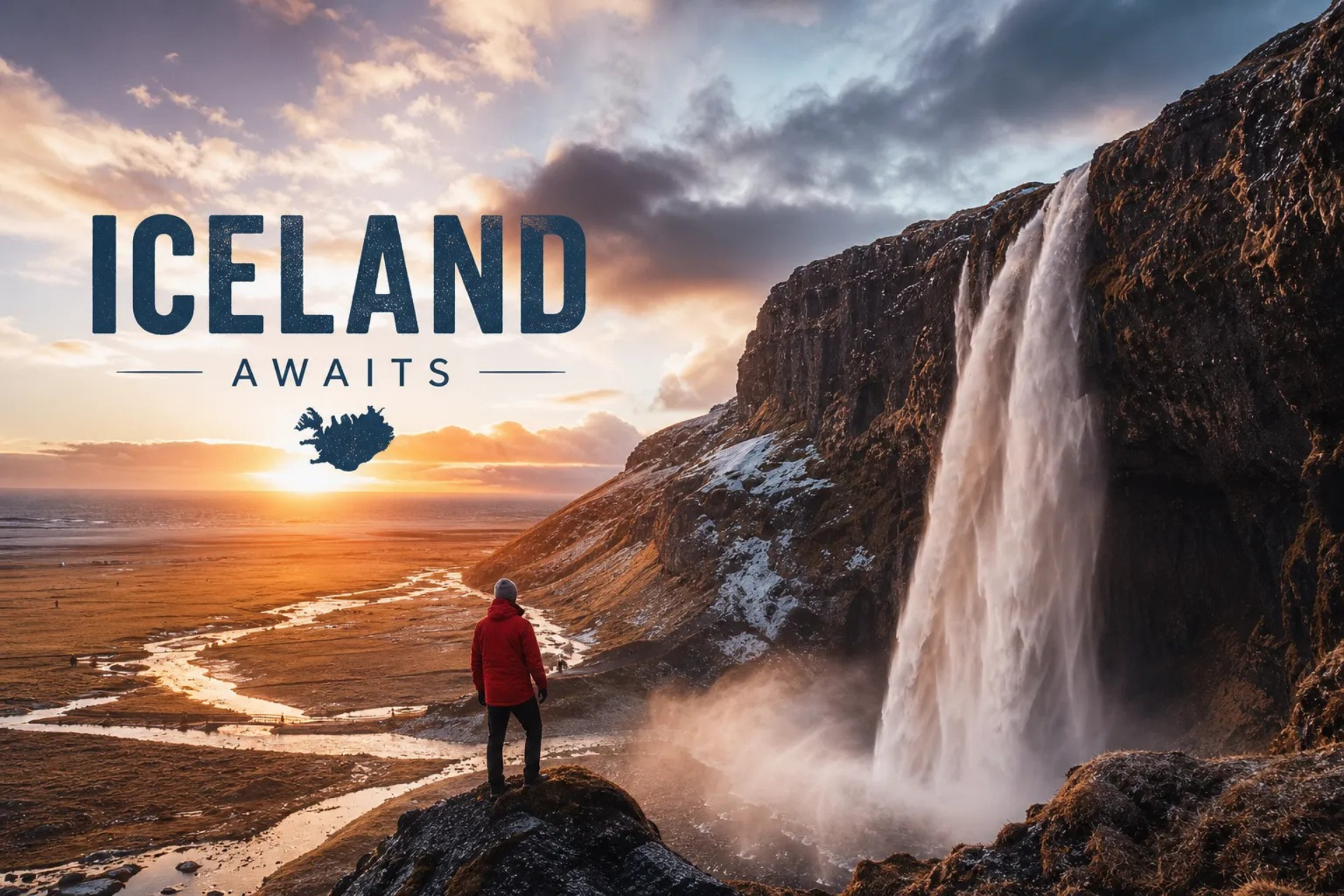
The Ultimate Iceland Travel Guide for UK Travellers

Iceland is one of the most extraordinary holiday destinations on Earth, and for UK travellers, it is closer and more accessible than most people realise. Within a single island, you encounter erupting geysers, ancient glaciers, spouting whales, steaming geothermal pools, and one of the most breathtaking natural light shows on the planet. Flight times from most UK airports to Reykjavík run at approximately two to three hours depending on route and carrier, which means you can be standing on a lava field or soaking in a geothermal lagoon before most European city breakers have even reached their hotel. Once you understand the country's geography, you will quickly see why a structured, multi-base itinerary is widely recommended for anyone who wants to see more than a narrow slice of what the destination offers.
This guide covers everything you need to plan an Iceland holiday: where to go, what to do, when to visit, and how to put it all together without the stress of going it alone. If you have ever wondered how to fit the Northern Lights, the Golden Circle, a glacier hike, and a geothermal soak into one trip, you are in exactly the right place.
Key takeaways
- Flight time from UK: Reykjavík is roughly two to three hours from most UK airports, making Iceland one of the most time-efficient adventure destinations available.
- Best aurora months: Late February and March offer the highest probability of seeing the Northern Lights, with October and November as strong alternatives.
- Multi-centre approach: Iceland's best experiences are spread across the entire country; a single base in Reykjavík means significant compromise.
- Glacier hikes are accessible: No specialist experience is required; a standard guided hike lasts two to three hours with equipment provided.
- Book spas in advance: The Blue Lagoon and Sky Lagoon both require advance booking, sometimes weeks ahead during peak season.
- Golden Circle deserves a full day: Rushing it as a day trip means missing the quieter gems that make the route worth remembering.
What makes Iceland unlike any other holiday destination?
Iceland sits on the Mid-Atlantic Ridge, where two tectonic plates slowly pull apart beneath the surface. The result is a landscape that feels unlike anywhere else: active volcanoes, lava fields, waterfalls crashing over basalt cliffs, and geothermal vents steaming from the ground. For UK travellers accustomed to predictable European city breaks, arriving here feels less like touching down at an airport and more like stepping onto another planet entirely.
The appeal runs far wider than adrenaline tourism. Yes, you can hike across a glacier or snorkel between tectonic plates, but you can equally spend a full afternoon floating in a geothermal lagoon, drink in hand, watching steam rise against a winter sky. That dual character, wild and restful in equal measure, is what makes Iceland work so brilliantly for couples with different travel personalities and for families with children of varying ages. Adventure and restoration coexist here in a way that very few destinations manage.
The combination of dramatic scenery, genuine wilderness, and a culture built around outdoor exploration has made this a firm favourite with adventure-seeking couples, active families, and solo travellers. Despite its otherworldly reputation, it remains remarkably approachable: English is widely spoken, well-maintained infrastructure covers most of the main routes, and Iceland tourism infrastructure is well developed after years of catering to international visitors.
When is the best time to visit Iceland?
The answer depends largely on what you want from the trip. Visit Iceland in winter for aurora hunting, frozen landscapes, and ice caves. Come in summer for the Midnight Sun, hiking, and whale watching at its peak. The shoulder months of April, May, September, and October offer a balance of both, with more manageable crowds and competitive pricing.
Is watching the Northern Lights really as magical as people say?
The short answer is yes. The longer answer is that the experience varies considerably depending on when you visit, where you position yourself, and how active the solar conditions are on a given night. The Northern Lights are typically visible in Iceland from late August or September through to mid-April, when nights are long and dark enough to offer a clear view. Peak months tend to be late February and March, when clear skies combine with longer nights and elevated solar activity near the spring equinox.
Reykjavík itself offers surprisingly decent viewing on clear nights if you head to darker spots on the city's outskirts. The more memorable aurora experiences, however, happen further afield. The Snæfellsnes Peninsula, the south coast near Vík, and the remote north all deliver skies with far less light pollution. Many guided aurora tours monitor real-time forecasts and may reposition during the evening if cloud cover moves in, the single most practical step you can take to maximise your chances of a sighting.
Standing under an Icelandic sky, watching a green curtain of light begin to build overhead, is one of those experiences that bypasses every attempt at adequate description. Some nights deliver a faint shimmer; peak activity produces the full flowing display that fills every photograph you have ever seen. Either way, it is the kind of moment that recalibrates your sense of what travel is capable of delivering.
Do you need a dedicated aurora tour?
Not strictly, but a guided tour increases your odds considerably. Experienced drivers know where to go when conditions shift, and the best operators will reschedule or credit you if cloud cover makes a sighting impossible. For an Iceland holiday centred on the aurora, it is worth building at least two dedicated viewing nights into your itinerary.
What do Iceland's geothermal spas offer that nowhere else can match?
The Blue Lagoon is the most famous geothermal spa in the world for good reason. Its milky blue, silica-rich waters sit in the middle of a lava field, heated naturally to around 38°C, and the surrounding landscape makes every visit feel surreal. It requires advance booking, sometimes weeks ahead during peak season, and prices have climbed over recent years. The experience, however, delivers on expectation.
Sky Lagoon, located near Reykjavík, has emerged as a genuine alternative, featuring a dramatic infinity edge overlooking the North Atlantic and a structured seven-step Icelandic bathing ritual. For those visiting the Golden Circle, Laugarvatn Fontana offers pools overlooking the lake alongside steam rooms heated by geothermal vents directly beneath the building. Further afield, Krauma in West Iceland draws water from Deildartunguhver, one of Europe's most powerful hot springs, and is one of the most highly rated spa experiences in the country.
For a wilder, more stripped-back encounter, natural hot springs such as Reykjadalur Hot Spring Valley and Seljavallalaug require a hike to reach but reward the effort with an outdoor soak unlike anything a hotel pool can offer. Even small towns across the country maintain their own public swimming pools, known as sundlaugar, heated by geothermal energy. Locals treat these communal pools as a central part of daily life, and spending an hour in one gives you a more honest window into Icelandic culture than almost any tourist attraction can.
Which glacier hikes and wildlife experiences are worth making time for?
Iceland's glaciers are accessible with a guide and crampons. Sólheimajökull and Svínafellsjökull are among the most visited, the latter has been used as a filming location for various major productions, including scenes set in icy terrain in both television and film. A standard glacier walk lasts two to three hours, requires no specialist experience, and includes all necessary equipment. The total tour, including the approach walk and briefing, typically runs three to four hours from the meeting point.
What does a glacier hike actually cost?
Typical costs in 2026 run from around ISK 13,000 to 20,000 per person for a meet-on-location hike, though prices vary by operator and group size. The surface of a glacier, with its crevasses, meltwater channels, and shifting blue light, is one of those environments that makes you feel very small in the best possible way.
For wildlife, Húsavík on Iceland's north coast is widely regarded as the whale watching capital of Europe, with humpback whales, minke whales, white-beaked dolphins, and occasional blue whale sightings between May and September. Reykjavík Harbour also runs regular whale watching tours year-round, though no sighting is ever guaranteed. The Snæfellsnes Peninsula stands apart for orca sightings, particularly in winter when herring draw the pods close to shore. The variety of species and the regularity of sightings make this one of the most rewarding wildlife destinations in the Northern Hemisphere.
Why does the Golden Circle deserve more than a rushed day trip?
The Golden Circle is a roughly 230-kilometre loop from Reykjavík taking in three landmark sites: Þingvellir National Park, the Geysir geothermal area, and Gullfoss waterfall. Þingvellir is the historic site of Iceland's first parliament, dating to 930 AD, and the place where you can walk in the rift valley between the North American and Eurasian tectonic plates. Strokkur at Geysir erupts frequently, typically every five to ten minutes, and can reach substantial heights of up to 40 metres. Gullfoss is a two-tiered glacial waterfall of extraordinary scale, particularly in spring when meltwater volume peaks.
A relaxed full circuit takes around eight hours of driving and sightseeing. Tour buses do the Golden Circle as a single long day from Reykjavík, and while that covers the three main stops, it leaves very little time for the quieter gems along the route: the Kerið volcanic crater, the Faxi waterfall, the Friðheimar tomato greenhouse where lunch is served surrounded by growing plants beneath geothermal glass. These are the details that separate a memorable Iceland holiday from a checklist visit.
Positioned between the south coast attractions and Reykjavík, the Golden Circle is a natural centrepiece of any multi-day itinerary. It pairs well with a glacier hike the day before or a geothermal spa visit the following morning. Planning it as part of a structured multi-day route, rather than a standalone day trip, is the approach most likely to do it justice, and it is the kind of thing a good Iceland travel specialist will build in as standard.
How a multi-centre holiday package makes exploring Iceland genuinely stress-free
Iceland's roads are beautiful and self-driving is possible for confident drivers, but the distances are significant, weather conditions can change rapidly, and planning accommodation, activities, and transport across multiple regions adds real complexity to a holiday. Many travellers who arrange independent Iceland trips find they spend more time managing logistics than they do actually enjoying the country, a real concern when annual leave is measured in days rather than weeks.
A well-designed multi-centre Iceland package solves this by building an itinerary around multiple bases: typically Reykjavík in the south-west, the south coast for glaciers and waterfalls, and the north for whale watching and the Diamond Circle (a northern equivalent of the Golden Circle, taking in Húsavík, Dettifoss waterfall, and Lake Mývatn). Transport, accommodation, and key activity bookings are handled in advance. Rather than working out how to get from a glacier hike near Vík to a whale watching tour in Húsavík while also fitting in a geothermal spa, the route is already mapped and the bookings are already confirmed.
Skylord Cruise and Holidays offers exactly this kind of curated multi-centre Iceland holiday, combining destinations within a single planned route so that travellers cover more ground with less friction. For a destination where the best experiences are scattered across a landmass comparable in size to England but far more sparsely populated and with fewer transport hubs, having end-to-end planning handled by specialists makes a tangible difference to what you actually get out of the trip. Whether you are planning a couples' aurora and glacier adventure or a family itinerary built around whale watching and hot springs, the team at Skylord Cruise and Holidays can build an Iceland holiday around your priorities.
Iceland earns every word of its reputation
This destination delivers on every promise it makes. The Northern Lights stop you in your tracks. The geothermal pools are as restorative as they look. Standing on a glacier or watching a humpback breach off the Húsavík coast is the kind of experience that stays with you long after you are home. The Golden Circle alone is worth the flight from the UK.
What separates a decent Iceland holiday from one that fully delivers is the itinerary behind it. The country's geography rewards a multi-centre approach, and having specialists handle the planning frees you to simply be present in one of the world's most remarkable places. If this destination has been on your list, speak to the team at Skylord Cruise and Holidays and let them put together an Iceland holiday that does it proper justice.
Frequently Asked Questions
Is Reykjavík a good single base for seeing everything in Iceland?
No, Reykjavík as a single base means significant compromise; I recommend a multi-centre approach for fuller coverage. Reykjavík does offer decent aurora viewing from darker outskirts and convenient access to spas like Sky Lagoon, but the best experiences — whale watching in the north, quieter aurora spots on Snæfellsnes, and south‑coast glaciers — are spread across the country.
Are glacier hikes suitable for people with no previous experience?
Yes, glacier hikes are accessible to beginners; a standard guided hike requires no specialist experience. I note that walks typically last two to three hours on the ice with all equipment provided, and the total tour including briefing and approach usually runs three to four hours from the meeting point.
Should I book geothermal spas before I travel?
Yes, you should book popular spas in advance because places like the Blue Lagoon and Sky Lagoon require advance booking, sometimes weeks ahead during peak season. I advise reserving slots early to avoid disappointment, especially in summer when demand and prices rise.
When can I expect the best chances of seeing whales in Iceland?
The best whale‑watching season for Húsavík is between May and September, when sightings are most regular, though Reykjavík runs tours year‑round. I also highlight that orca sightings concentrate around the Snæfellsnes Peninsula in winter, and no sighting can be guaranteed on any given tour.