
Alaska cruise tips that first-timers wish they'd known
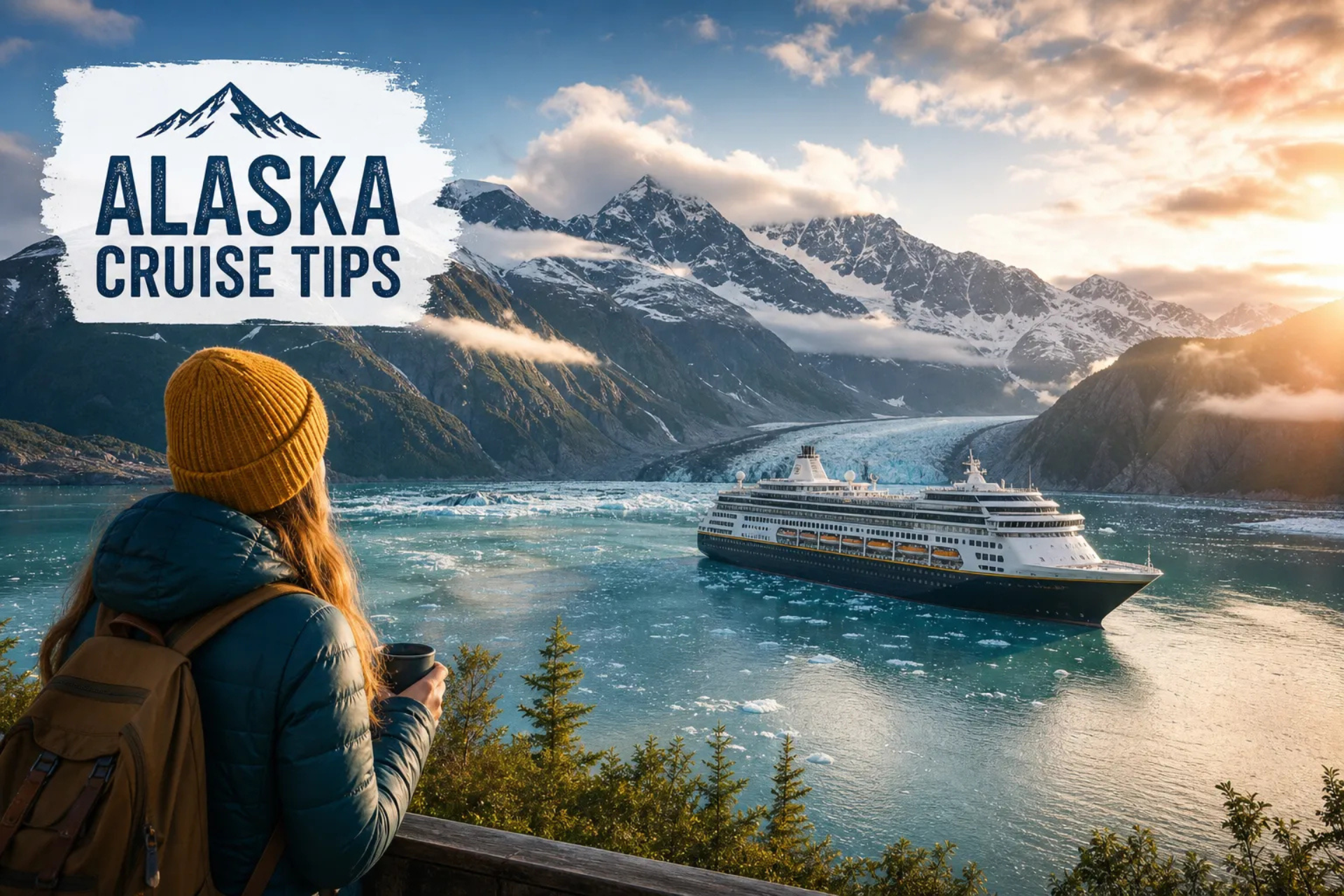
Alaska cruise tips that first-timers wish they'd known
Alaska cruise tips can make the difference between a voyage that exceeds every expectation and one that leaves you quietly regretting what you missed. Alaska has a way of sorting travellers into two groups before the ship even docks. The first group arrives with the right gear, the key excursions already secured, and a clear understanding of what their itinerary actually covers. The second arrives with too many formal outfits, a balcony on the wrong side of the ship, and the creeping realisation that the whale-watching tour they wanted sold out three months ago. Both groups booked the same cruise. The gap between them is entirely about preparation.
This is the paradox of Alaska: it is one of the most anticipated voyages in the world, planned years in advance by people who genuinely care about doing it right, and yet it remains one of the most commonly under-prepared trips on the market. The Inside Passage does not reward wishful thinking. It rewards specificity, knowing which month to sail, which layers to pack, where to stand when a glacier calves, and which shore excursions to book before you even step aboard.
At Skylord Cruise and Holidays, we build tailor-made Alaska itineraries that match the voyage to what each traveller actually wants from it, whether that is maximum wildlife, serious glacier time, or the quietest possible sailings. This guide covers the practical decisions that make the biggest difference, drawn from the questions first-timers ask most often and the mistakes even well-researched travellers tend to make.
Alaska cruise tips: choosing the right time to sail
Alaska's cruise season runs from May to September, and the temptation is to treat those five months as broadly equivalent. They are not. Each window delivers a genuinely different version of the voyage, and choosing without thinking about what you personally want from the trip is one of the most common planning errors.
June is the standout month for most travellers seeking a well-rounded experience. Daylight stretches past 18 hours in some ports, temperatures are improving rather than declining, and humpback whales are actively feeding in the region's nutrient-rich waters. Bald eagles are reliably present along the coastline, and brown bears begin appearing near streams, though sighting rates for bears typically peak in July and August as salmon runs intensify. June threads the needle: serious wildlife viewing, manageable weather, and slightly lighter port congestion than peak summer. July and August offer the highest activity levels across all wildlife categories, but they also bring the heaviest crowds and the steepest prices.
May and September serve a different kind of traveller. May brings noticeably lower prices, quieter sailings, and a raw, early-season atmosphere that some people find more compelling than peak summer. The trade-off is cooler temperatures and less consistent wildlife activity. September, by contrast, offers dramatic autumn colours on the hillsides, very manageable crowds, and often strong value, but rainfall increases substantially. Juneau sees roughly nine inches of precipitation in September compared to around four inches in June. If crowd avoidance matters more to you than guaranteed sunshine, September earns its place.
One factor that catches almost every first-timer off guard is the extended daylight. Eighteen-plus hours of light in June and July disrupts sleep in ways that travellers from the UK genuinely do not anticipate. Pack a quality eye mask and expect your body to need a day or two to adjust. On a week-long voyage, that small detail is the difference between arriving fresh at glacier viewpoints and struggling through fog.
Alaska cruise packing tips: dressing for unpredictable weather
Alaska in summer is not warm and stable. It is a layering puzzle that changes by the hour, and the travellers who pack for the wrong version of it spend their time on deck shivering through fleeces that are not quite enough, or sweating through heavy coats designed for a Scottish winter rather than a Ketchikan morning. A solid Alaska cruise packing list is not about volume; it is about the right combination of fabrics and functions.
The layering system that works consistently starts with moisture-wicking base layers: long-sleeve tops and thermal options that move sweat away from the skin and dry quickly. On top of that, a fleece or insulated mid-layer handles the temperature drop that comes with wind on open decks or early-morning glacier approaches. The outer layer is where most people either get it right or get very wet: a waterproof, windproof rain jacket with a proper hood is non-negotiable. Not showerproof. Not water-resistant. Waterproof. Ketchikan is one of the wettest cruise-port towns in Southeast Alaska, and the Inside Passage will test whatever you bring.
Waterproof trousers are worth including for any excursion that puts you near glacier ice, on a zodiac, or kayaking near wildlife. Water-resistant walking boots protect against wet dock surfaces and the muddy shoreline trails you will encounter ashore. Warm accessories (a beanie, gloves, and a scarf) take up almost no space in a bag and earn their keep on early-morning open decks when the temperature feels nothing like the calendar suggests it should.
What not to bring is equally worth thinking about. Many Alaska sailings are more casual than Caribbean itineraries with regular formal nights. The instinct to pack for black-tie evenings is understandable, but two or three smart casual outfits will cover everything you need. Every item of formal wear added to the suitcase is a quick-dry layer or a pair of waterproof trousers left behind, and you will feel that trade-off on the first grey morning at sea.
Glacier viewing: where to stand and why cabin choice matters
One of the most common booking mistakes on an Alaska cruise is choosing a cabin without thinking about where the glaciers will appear. Glacier Bay and Hubbard Glacier are the two most significant scenic cruising segments on most Inside Passage itineraries, and travellers who booked the cheapest available cabin without considering orientation sometimes spend the best hours of the voyage watching everyone else lean over the opposite railing.
A balcony cabin is worth serious consideration for any itinerary that includes extended glacier viewing time. The privacy and comfort are genuine advantages when you are watching a glacier for two or three hours, and the ability to step outside without competing for position among other passengers has real value. However, the public observation decks and the bow of the ship offer a wider, unobstructed panoramic view that no single balcony can match, and they let you move from side to side as the action demands. Ships often reposition during glacier viewing so that passengers on both sides get comparable views, which reduces the advantage of any fixed balcony position.
For most Inside Passage routes, glaciers appear to port on the southbound leg and to starboard on the northbound leg, though this varies by specific itinerary and the cruise line's approach through the passage. Check your ship's route in advance and get to a deck early. Glacier guides and cruise operators frequently note that calving activity tends to be more pronounced during the cooler morning hours, those already on deck at six or seven in the morning with a warm drink are the ones who witness the moments that photographs cannot fully replicate.
Wildlife spotting: where patience pays off
From humpback whales and orcas to brown bears, bald eagles, and Dall's porpoises, Alaska's wildlife is one of the primary reasons people choose this voyage over a Caribbean or Mediterranean alternative. The challenge is that many passengers wait for an announcement over the PA rather than positioning themselves for the best chance of a sighting in the first place.
The bow and upper open decks offer the broadest sightlines. Wildlife can appear on any side of the ship and at any distance, which means a balcony, for all its comfort, can be less useful than a public deck when an orca surfaces on the far side. Spend time on the open decks during scenic cruising segments rather than watching from a lounge or sitting in the cabin.
Experienced Alaska cruisers learn to read the water before anything is formally spotted. Feeding birds circling a patch of ocean often signal a whale feeding event below the surface. A sudden surface disturbance or a column of spray on the horizon is worth sustained attention. These are not expert-level skills; they are the kind of observational habits that any attentive traveller can develop within the first day at sea, and they produce sightings that feel genuinely earned rather than passively received.
Alaska shore excursions in Juneau and Ketchikan: what to book first
Many travellers lose the most value from their Alaska cruise not through bad choices but through delayed ones. The best excursions in both Juneau and Ketchikan have limited capacity and sell out weeks, sometimes months, before the ship departs. Waiting until you board to browse the excursion desk is, in practical terms, waiting too long.
In Juneau, whale-watching tours and Mendenhall Glacier visits are the headline excursions for clear reasons. Small-group whale-watching tours often accommodate fewer than a dozen passengers per boat, and the best operators book out by early spring for peak summer sailings. In our experience, the most popular small-group whale-watching tours in Juneau can book out around three months ahead of departure. Helicopter glacier landings are a premium option worth considering for travellers who want a once-in-a-lifetime perspective, but they carry the tightest inventory of all. Book these before you board the ship, ideally as soon as your itinerary is confirmed.
In Ketchikan, Misty Fjords flightseeing by floatplane is the excursion that consistently draws the strongest responses. Many operators use four-to-six-seat aircraft for this route, though larger options exist, which means total daily capacity across all operators is genuinely limited. Zodiac and small-boat wildlife tours are another strong choice for close-up marine wildlife encounters. Both categories have tight inventory and are the ones most likely to be unavailable if booking is left until the last minute.
Not everything requires advance planning. Basic city walking tours, totem pole cultural visits, and self-guided exploration in both ports can be arranged flexibly or handled independently on the day. Being selective about what you pre-book makes the overall process manageable rather than overwhelming, and it means you protect the experiences that genuinely cannot be replaced if they sell out.
The planning mistakes that quietly wreck the trip
Beyond packing and excursions, there are logistical decisions that sit quietly in the background of Alaska cruise planning until they go wrong. Flying in on embarkation day is among the most consistently regretted. Vancouver and Seattle are the two main embarkation ports for Inside Passage itineraries, and a single delayed or cancelled flight can mean missing the ship entirely. The ship does not wait. Flying in at least one day early is not cautious; it is standard practice for any voyage that begins at a fixed time in a city you do not control.
Travel insurance is the other item that travellers regularly underestimate until they need it. An Alaska cruise is a significant investment, the voyage is remote, and the cost of a medical evacuation or a missed sailing without coverage is the kind of number that clarifies the decision immediately. Include it in the budget from the start rather than treating it as an optional line item at the end.
Finally, and perhaps most consequentially: not all Alaska itineraries cover the same ground. Some miss Glacier Bay entirely. Others spend more time in ports than at sea. Travellers who book on price alone and later discover they have missed the scenic cruising segments or wildlife-rich stretches they most wanted are among the most consistently disappointed. This is precisely where working with a specialist matters. At Skylord Cruise and Holidays, matching the right Alaska itinerary to what a traveller actually values, whether that is glaciers, wildlife, cultural ports, or the widest possible open-sea time, is where specialist knowledge makes the difference. The detail that separates a memorable voyage from a frustrating one is often a single itinerary decision made months before departure.
The prepared traveller comes home with better stories
Alaska does not punish curiosity or ambition. What it does, consistently and without sentiment, is reward preparation. The travellers who arrive with the right layers, the key excursions secured, a clear picture of their route, and a day's buffer before embarkation are the ones who come home with accounts of calving glaciers at dawn, humpbacks surfacing off the bow, and brown bears working the riverbank in the September light.
The practical steps in these Alaska cruise tips, timing the voyage right, building a proper layering system, understanding cabin and deck positioning, and booking high-demand excursions early, are each individually small. Adding travel insurance as a budget line from the outset, rather than an afterthought, rounds out the preparation. Together, these steps constitute the difference between an Alaska cruise that delivers on its considerable promise and one that leaves you wishing you had known sooner.
If you are ready to start planning, the team at Skylord Cruise and Holidays specialises in tailor-made Alaska itineraries built around what each traveller genuinely wants from the voyage. Get in touch and let us help you choose the right sailing and cabin, and secure the experiences most likely to sell out before you expect.