Best Month for a Mediterranean Cruise: Month-by-Month Guide
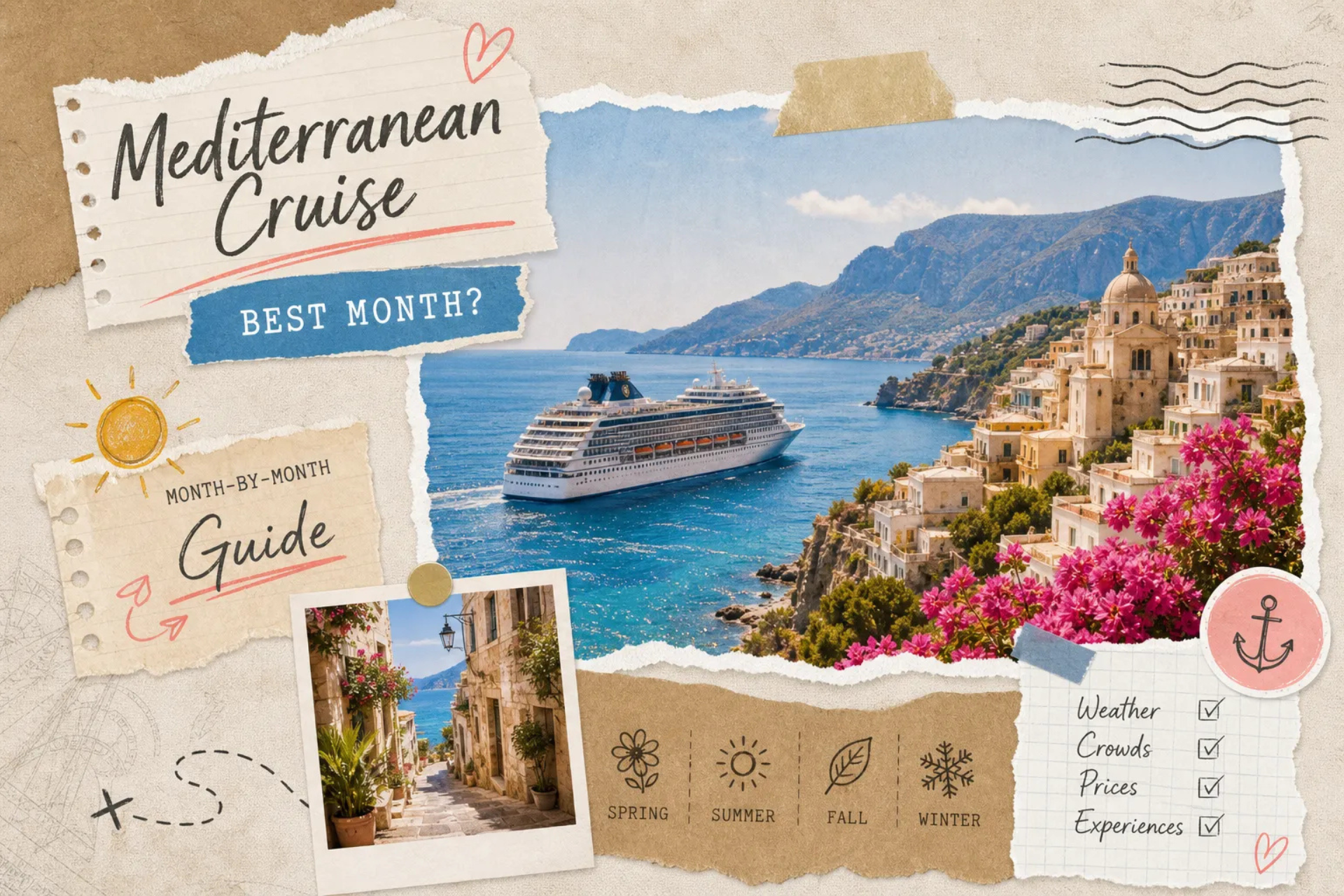
Best Month for a Mediterranean Cruise: Month-by-Month Guide
If you're trying to work out the best month for a Mediterranean cruise, you're asking exactly the right question, and the honest answer is that it depends on what you actually want from the trip. Most cruise demand peaks in June through August, with August typically the busiest month of the year. Travellers picture turquoise water, hot sun, and a glass of something cold in Santorini. Then they arrive, join a queue of 17,000 fellow cruise passengers funnelling through Oia's narrow streets, and spend their port days sweating through landmarks rather than enjoying them. Those who cruise the Mediterranean a second time rarely make the same choice twice.
Many operators concentrate regular Mediterranean itineraries between April and November, though sailings occur year-round. That's a broad seasonal window, yet the school holiday calendar funnels the majority of British travellers into a ten-week stretch that represents the most expensive, most crowded, and, for Eastern itineraries, the roughest sailing of the year. Understanding the full shape of the season is what separates a good Mediterranean cruise from a genuinely memorable one.
At Skylord Cruise and Holidays, this is one of the questions we field most often. This guide gives you the tools to work it out. We'll walk through each part of the season, explain the regional differences that most generic guides ignore, and give you a clear framework for matching the right sailing window to your actual priorities.
Why "best" is the wrong starting point, and what to ask instead
There are four variables that actually drive a great Mediterranean cruise: weather comfort, port crowd levels, cruise fare pricing, and sea conditions. The problem is that these four variables don't peak in the same month. July offers reliably warm seas but sky-high fares and packed ports. January offers bargain fares and empty landmarks but rough water and cold air. September, as we'll come to, is the month where these variables align most favourably for most travellers. But that doesn't make September universally correct. Once you understand which of these four factors matters most to you, the calendar decision becomes far simpler.
The second thing to understand is that the Mediterranean is not one climate. A Western itinerary through Barcelona, Nice, and Rome behaves very differently from an Eastern route through Athens, Santorini, and Dubrovnik. The Meltemi wind, a persistent northerly that builds across the Aegean from late June through mid-August, produces sustained winds of 15 to 30-plus knots and choppy seas that can force itinerary adjustments, delay docking at smaller ports, and make open-water passages uncomfortable. It barely touches the French Riviera. So when someone asks us the best time to cruise the Mediterranean, one of our first questions is always: which Mediterranean?
Best month for a Mediterranean cruise, Spring (April and May)
April and May represent one of the most undervalued windows across the entire Mediterranean cruise season. Air temperatures across key ports range from around 12°C in April to 18°C by late May, ideal for sightseeing without the oppressive heat that makes July port days a test of endurance. Sea temperatures climb from 15°C to 18°C across this period, refreshing rather than warm, which means the pool deck sees less competition. Seas are generally calm, with only early April carrying residual winter roughness from March systems.
The Greek islands begin opening mid-to-late April, which makes May the earliest reliable window for a full Eastern Mediterranean itinerary. Santorini in May is a markedly different experience from the same island in August: the caldera view exists without the 17,000 daily cruise visitors that descend at peak season. Dubrovnik's old walled city in April is one of the region's most underrated experiences; the stone streets and fortifications feel like they belong to you rather than to a crowd. Fares in spring typically run around 20 to 30 per cent below peak summer rates, or more, depending on route and cabin class, making this one of the stronger value windows of the year for travellers with some flexibility.
Summer sailings (June to August): what peak season really costs you
Peak season is not without merit, but it carries costs that go beyond the price of the fare. By July, Athens and Piraeus regularly hit 28°C, with midday sightseeing uncomfortable and some archaeological sites reducing access during the hottest hours. August fares are the highest of the year, with average inside cabin costs often significantly higher than winter rates, frequently double or more than January prices. Ports that are atmospheric in May become logistical exercises in crowd management by the height of summer.
The Meltemi wind compounds the Eastern Mediterranean picture further. From mid-July through mid-August, Mykonos, Paros, Naxos, and Santorini sit in the wind's most direct path, with gusts exceeding 30 to 35 knots at times. Smaller ships adjust itineraries; boat-based excursions are frequently cancelled or diverted to sheltered bays. If calm seas matter to you and your itinerary runs through the Cyclades, high summer is the worst window to be there. For a practical primer on how the Meltemi affects Aegean sailing and what to expect, see this guide to the Meltemi.
That said, there are genuine reasons to sail in summer. Sea temperatures hit 24 to 26°C, beach days are reliably excellent, and the long daylight hours mean more time ashore. Families travelling during school holidays have few practical alternatives, and a Western Mediterranean cruise in June, before the full August surge, hits a genuine sweet spot: warm weather, functioning local services, and fares that haven't yet reached their ceiling. The key is choosing June over August and a Western itinerary over an Aegean one if sea conditions are a concern.
Why September is the best month for a Mediterranean cruise for most travellers
September is the month where the four key variables align most favourably for the widest range of travellers. Air temperatures settle between 21 and 25°C across the region. Sea temperatures remain at a swimmable 22 to 24°C, warm enough for genuine beach days without oppressive heat ashore. The Meltemi winds ease considerably, returning the Aegean to the calm conditions that make Eastern itineraries a pleasure rather than a test. Cruise fares drop by around 25 to 45 per cent compared to the August peak, depending on cabin type and itinerary.
Ports that were overwhelming in August feel manageable again in September. Santorini and Dubrovnik remain fully operational. Named harvest festivals such as the Greek wine harvest celebrations in Nemea and similar events across southern Italy add real local colour, and the quality of light in September, lower in the sky and golden rather than bleaching white, makes for some of the best photography of the year. For context on visitor patterns and how peak cruise numbers affect islands like Santorini, see these Santorini tourism statistics. September is our most-booked shoulder month at Skylord Cruise and Holidays, and it's not hard to understand why. It delivers nearly everything summer promises at a fraction of the cost and pressure.
October extends the value further, with even quieter ports and another step down in fares. The trade-offs are sharper: Dubrovnik sees more rain from mid-October, some smaller Greek island ferry services begin to wind down, and the Eastern Aegean becomes less predictable. Sea temperatures remain swimmable at 19 to 21°C, and October is an excellent month for a Central or Western Mediterranean itinerary, particularly for travellers who would rather have the Colosseum or the Acropolis at a tenth of the usual capacity than the warmest possible sea.
Winter and early spring sailings (November to March): bargain fares and quiet ports
November through February brings the Mediterranean's roughest sea conditions, with wave heights regularly reaching 2 to 3 metres and winter storm systems crossing the basin in quick succession. Air temperatures in Barcelona and Rome drop to 9 to 12°C, and Dubrovnik dips to 7°C in January. Rainfall increases across the board. These months are not suited to beach-focused cruises, and smaller Aegean island ports operate on reduced schedules or become impractical stops for leisure itineraries.
The case for off-peak sailing is real, however, for the right kind of traveller. January fares can be as low as a third of August rates, and the transformation of Mediterranean cities without their summer visitors is worth considering seriously. Landmarks like the Colosseum and the Acropolis become far more contemplative experiences when they aren't shared with several thousand other visitors at once. This window suits history-focused travellers, retired couples with flexible schedules, and anyone who values exploring a city on its own terms. It is not for everyone, but for the right traveller, a winter Mediterranean sailing is one of the most rewarding experiences the region offers.
Matching your ideal month to what you actually want from the cruise
Rather than handing you a single answer, the more useful exercise is mapping your priorities to specific windows. Here is a practical shortlist based on the four variables we've tracked throughout this guide:
- Sightseeing without heat or crowds: May or October, with May preferred for Eastern itineraries where the islands have just reopened and crowds have yet to build.
- Warm sea swimming and reliable beach days: July through early September, with a Western Mediterranean itinerary preferred in July and August to avoid the Meltemi.
- Best value fares with usable weather: September first, closely followed by May. Both offer shoulder-season pricing with genuinely pleasant sailing conditions.
- Calmest seas for comfort: June, May, or September. Avoid the Eastern Aegean from mid-July through mid-August if sea motion is a concern for you or anyone travelling with you.
The regional picture also sharpens the decision. For Western Mediterranean itineraries through Barcelona, Nice, Rome, and Monaco, May and September are consistently optimal across all four variables; for details on local averages you can consult data on average weather in Barcelona. For Eastern Mediterranean routes through Athens, Santorini, and Mykonos, late April and May, along with September and early October, are the windows that avoid the Meltemi while keeping the islands fully open. For Central Mediterranean itineraries covering Dubrovnik, the Croatian coast, and southern Italy, May to June and September to October offer the best combination of warm seas, comfortable temperatures, and manageable crowds.
Identifying your ideal window is the first half of the decision. Finding an itinerary that genuinely makes the most of it is the second. The departure date and the route work together; a September sailing on the wrong itinerary delivers far less than a well-constructed one. That's exactly the kind of detail the team at Skylord Cruise and Holidays specialises in, whether that's a family summer sailing in the Western Med or a quieter autumn escape through the Aegean. For an overview of the consensus on seasonal timing for Mediterranean sailings, see this guide to the best months to cruise the Mediterranean.
The clearest answer this guide can give you on the best month for a Mediterranean cruise
For most travellers, the best month for a Mediterranean cruise comes down to May or September. These two months offer the most favourable alignment of weather, crowd levels, sea conditions, and fare pricing. Summer belongs to families tied to school holidays, particularly on Western itineraries in June before the August surge takes hold. January and February belong to travellers who want maximum value, minimum crowds, and who don't mind trading beach days for the freedom of empty landmarks and quiet city streets.
The Eastern Mediterranean rewards those who time their visit around the Meltemi: late April, May, and September are the windows where the Cyclades are at their most navigable and their most beautiful. The Western Mediterranean is more forgiving across the year, with mild shoulder seasons on both ends of summer making it a reliable choice from April through October.
The decision ultimately belongs to your priorities, not to a generic calendar. If you'd like to work through which itinerary and sailing window actually fits what you're looking for, the team at Skylord Cruise and Holidays is well placed to help. We build Mediterranean cruise packages around specific sailing windows rather than generic departure dates, and we know the difference between a good booking and a great one. If you prefer a classic Aegean route, consider our Skylord Cruise and Holidays has a huge number of Mediterranean cruise offering; alternatively, for a twin-centre escape you might like the 13 Night Lake Garda, Venice, and Greek Isles Summer Cruise. We also run variations of the Adults Only itineraries at different dates, see another departure option Athens, Crete, Santorini and Mykonos - Adults Only Med Cruise for full details and availability. Get in touch and we'll work out the sailing window that actually fits your trip, not just the most popular one.