
Colosseum Rome: The Ultimate Visitor's Guide
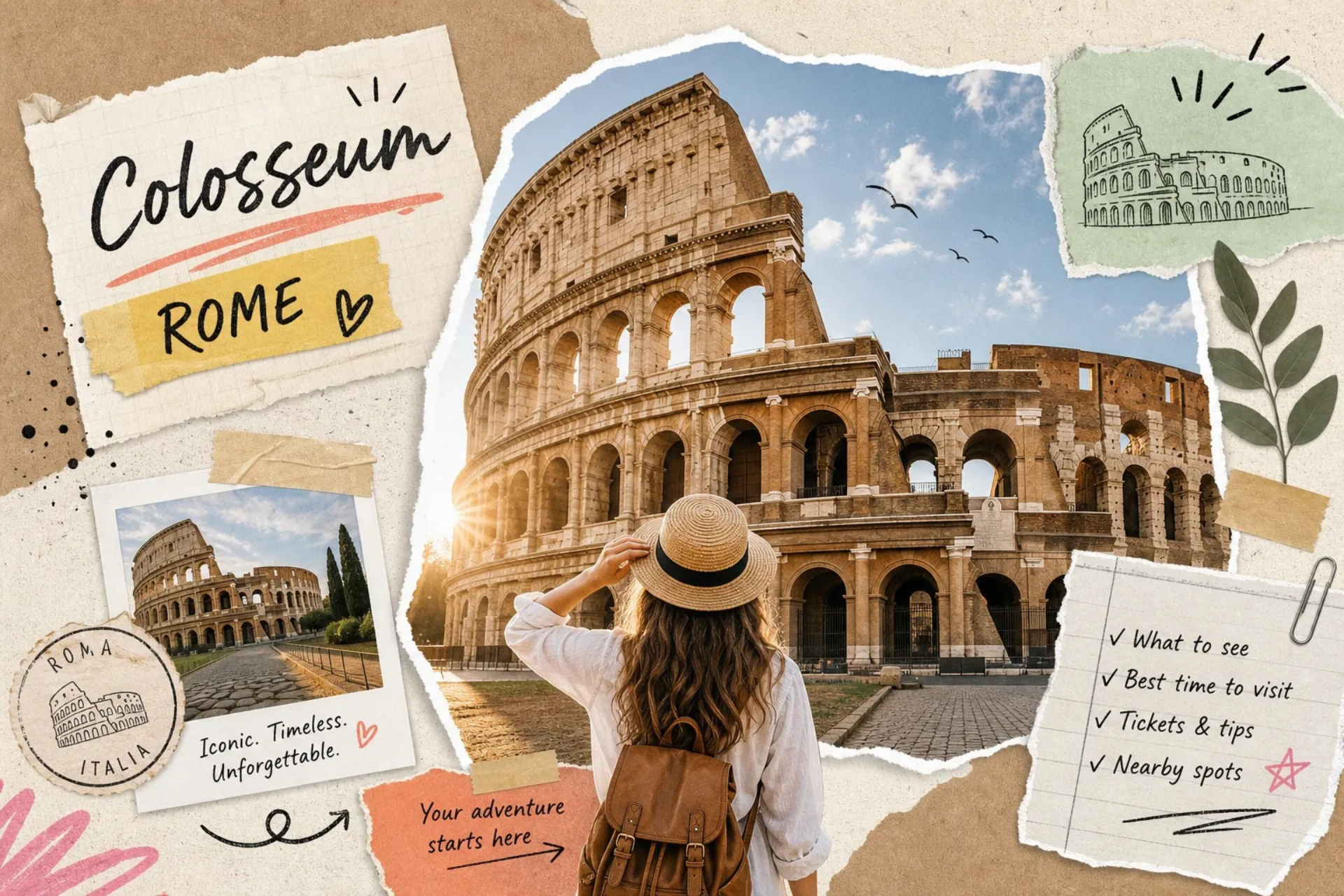
Colosseum Rome: The Ultimate Visitor's Guide

For nearly two millennia, the Colosseum in Rome, the Flavian Amphitheatre, has drawn crowds. First it was gladiators, wild animals, and the spectacle of Roman power. Now it draws tourists clutching smartphones and travel guides, queuing in the Italian sun, occasionally missing the timed entry slot they booked three weeks ago. The irony is a gentle one: the greatest obstacle standing between a modern visitor and one of the most extraordinary structures ever built is not a lion or a gladiatorial opponent. It is logistical confusion.
For UK travellers, Rome often sits at the heart of a wider Mediterranean ambition. It is the city that anchors itineraries, the destination that justifies the flight, and the place that specialists like Skylord Cruise and Holidays can weave into multi-centre Mediterranean journeys that extend the experience far beyond a single afternoon. Getting the Colosseum visit right is worth the preparation; getting Rome right, and then the coastline and islands beyond it, is the kind of travel that stays with you permanently.
This guide does exactly what it says. By the time you reach the end, you will know which ticket to book, where to buy it, when to arrive, what to leave at the hotel, and how to structure a half-day that takes in the full archaeological circuit without a single wasted hour.
Colosseum Rome tickets: how to choose and buy officially
The official ticketing system for the Colosseum is both the solution and the source of most visitor confusion. There are several ticket types, each covering different access points, and choosing the wrong one is a surprisingly common, and sometimes expensive, mistake.
Standard vs. Full Experience: what each ticket actually gives you
The 24h Standard ticket at €18 is the entry point for most visitors. It covers access to the Colosseum's first and second levels, the Roman Forum, and Palatine Hill, and for the majority of people making a first visit to Rome, it offers excellent value. The Full Experience tickets at €24 unlock additional areas depending on the variant chosen: the Arena floor, the Underground hypogeum, or the upper Attic viewpoints. These tickets are valid for two consecutive days, which adds flexibility if you want to spread the archaeological circuit across a morning and an afternoon.
The Underground and Arena access options tend to sell out fastest. During peak season, availability can go well in advance, often several weeks ahead in busy months such as July and August. If you want to stand on the reconstructed arena floor or descend into the hypogeum where animals and gladiators were held before being hoisted into the amphitheatre above, book those the moment your travel dates are confirmed. There is also a guided Underground and Arena option led by a PArCo educator, priced at around €32, which extends the experience with approximately 55 to 60 minutes of dedicated commentary in the hypogeum, including a closer look at the lifting mechanisms and passageways that made the spectacle possible. It is the most immersive option available through the official site. One important caution: the Forum Pass SUPER, priced at €18, covers the Roman Forum, Palatine Hill, and the Imperial Fora, but does not include Colosseum entry. Some visitors book it assuming it does, then arrive at the gate to discover the mistake. Do not let that be you.
How to buy from the official source and skip the queue legally
The only safe and official source for Colosseum tickets online is ticketing.colosseo.it . This is the Parco Archeologico del Colosseo's own ticketing platform, and booking through it is the single most effective strategy for avoiding the walk-up queues, which can run to hours during busy periods. There is a €2 online booking fee added to each ticket, a reasonable trade for bypassing the on-site queue entirely. Check the official site for the current fee, as it may be displayed separately or included in the total depending on the page. Touts and unofficial resellers operate around the site perimeter; they charge substantially more and offer no protection if something goes wrong. Avoid them entirely.
Guided tours arranged through the official system or through licensed operators add genuine value, particularly for the Underground, where the context of the hypogeum is far richer with an expert explaining what you are seeing. For the hypogeum in particular, a guide transforms a series of stone corridors into a vivid account of Roman stagecraft and logistics. For the standard levels, a self-guided visit works perfectly well, and the information panels throughout are thorough.
The best time to visit the Colosseum in Rome
Timing a visit to the Colosseum sounds like a minor detail. It is not. The difference between arriving at the right moment and arriving at the wrong one is the difference between a genuinely moving experience and a hot, exhausted shuffle through a crowd.
Which season strikes the right balance
The Colosseum opens year-round, but visitor volumes across those twelve months vary enormously. April to August is the peak window, with July and August reaching their most relentless levels of crowding. Spring, specifically April through to early June, is generally the sweet spot: temperatures are pleasant, the light is clear, and opening hours extend to 7:15 PM by late March. Autumn is consistently underrated. September and October bring softer, extraordinary light that photographers specifically seek out, and the summer saturation has eased considerably. Winter visits are quieter but shorter: opening hours contract to around 4:30 PM during the reduced-hours period, which typically runs from late October through to mid-February, though the precise dates shift each year. Check ticketing.colosseo.it before you travel to confirm the current seasonal timetable.
The golden windows within the day
Opening time, typically 8:30 AM, though always worth confirming at ticketing.colosseo.it, is the single most consistent recommendation from experienced Rome visitors. The site is cooler, the crowds have not yet built, and the early light across the arena is genuinely beautiful. That combination of practical and aesthetic advantages makes the early start worth the effort. Arriving one to two hours before closing is a solid alternative, with softer late-afternoon light and noticeably thinner crowds; just factor in that last admission is typically one hour before closing, so the window is tighter than it looks on paper. Midday in summer combines peak crowds with peak heat, and unless those are the only hours available to you, it is worth avoiding.
What to expect on the day: entry, security and practical logistics
The Colosseum operates airport-style security. Knowing what that means in practice, before you arrive with an oversized bag and a timed ticket that starts ticking, prevents the kind of friction that derails an otherwise well-planned visit.
Security screening and what you cannot bring in
All visitors pass through metal detector screening and bag inspection before entry, with bags subject to X-ray or visual inspection depending on the entrance used. Large rucksacks, suitcases, trolley bags and camping bags are refused at the gate. The official bag size limit is cited as approximately 40 × 35 × 15 cm by most sources, though limits can vary; check the official Parco Archeologico del Colosseo guidelines at ticketing.colosseo.it before you travel to confirm the current restriction. A compact day bag or small backpack is the right choice in any case. Beyond bag size, the prohibited items list includes glass containers, aerosol sprays, alcohol, tripods, selfie sticks, sharp objects, drones, and wheeled luggage. Arriving with any of these means turning back to find storage before your timed slot has already begun. Bag storage facilities exist near the site, so planning for this in advance is far preferable to discovering it under pressure at the gate.
Timed entry slots and ID requirements
Your ticket is linked to a specific timed entry window, and the flexibility around that window depends on which ticket you hold. Standard tickets allow arrival 15 minutes before or after the booked slot. Underground and Arena tickets are considerably stricter: you must arrive at least 30 minutes before the designated time, with no tolerance for lateness. You must also present a valid photo ID matching the name on the ticket. A passport or national identity card is the safest choice; a physical document is preferable to a digital version on a device, though the latter may be accepted. Children under 12 must be accompanied by an adult holding the correct ticket.
Half-day Colosseum Rome itinerary: Forum and Palatine Hill
The Colosseum, Roman Forum and Palatine Hill are covered by a combined ticket and sit within easy walking distance of one another. Together they form one of the most complete and affecting archaeological experiences anywhere in the world. The order and pacing of the visit matter more than most people expect.
Morning at the Colosseum (allow 1.5 to 2 hours)
Begin at the Colosseum. Energy is highest in the morning, crowds are at their lowest, and you will want the mental space to absorb what you are standing inside. The standard ticket gives access to levels one and two, where the view across the arena floor is arresting in a way that photographs do not fully capture. If you have booked an Arena or Underground slot, structure your morning around that timed entry. Allow 90 minutes as a minimum; two hours if you want to read the information panels properly and take photographs without feeling hurried.
Into the Roman Forum and up to Palatine Hill (allow 2 to 3 hours)
Walk from the Colosseum to the Roman Forum entrance in about ten minutes; your combined ticket covers it. Allow one to one and a half hours here. The Via Sacra, the Temple of Saturn and the Arch of Titus each reward slow, attentive exploration rather than a brisk walk-through. From the Forum, move up to Palatine Hill, the legendary founding ground of Rome, which offers sweeping views over the Forum below and a quieter atmosphere than the main archaeological area. Allow 45 to 60 minutes. The complete circuit totals 4 to 5 hours at a comfortable pace, or a brisk 3 hours if time is genuinely tight.
Rome as a gateway: combining your visit with a wider Mediterranean journey
A day at the Colosseum in Rome is unforgettable. A week across Italy and the Mediterranean, with Rome as the centrepiece, is something else entirely. The difference between those two experiences is usually planning, and knowing who can carry that planning for you.
Why Rome deserves more than a single day
Rome rewards the visitor who lingers. A focused day handles the Colosseum, the Forum, and Palatine Hill. The Vatican Museums, Trastevere and the Borghese Gallery each justify an additional day without any sense of diminishing returns; so does the city's food culture, which requires no monument at all to be memorable. Beyond Rome, Italy opens further: the Amalfi Coast, Florence, Venice and Sicily are all within reach by rail or sea. The Mediterranean extends further still, with Greece, Croatia, Malta and Spain sharing that same sun-saturated cultural richness that makes this part of the world such a compelling destination for British travellers.
How Skylord Cruise and Holidays builds Rome into something bigger
This is exactly the kind of itinerary that Skylord Cruise and Holidays specialises in. Rather than booking Rome as an isolated city break and then scrambling to attach other destinations separately, Skylord can build Rome into curated Mediterranean multi-centre itineraries, combining land stays in Italy with cruise legs that open up the wider region. For UK travellers who want to see more without carrying the full planning burden, this approach delivers the depth of a slow, considered journey with the ease of an expertly arranged package. Get in touch with the Skylord team to start building an itinerary that uses Rome as the beginning of something much larger.
Making the most of your visit: the key actions
The Colosseum is one of those rare places that genuinely justifies the hype, but only when you arrive prepared. The building has stood for nearly 2,000 years and survived earthquakes, medieval stone-quarrying and the relentless pressure of modern tourism. It will still be there if you arrive at the wrong time with the wrong ticket. But you will not get the experience it is capable of delivering.
Book your ticket at ticketing.colosseo.it well in advance. Choose the Full Experience if the arena floor or underground is a priority; the standard 24h ticket if the main levels are enough. Aim for opening time or late afternoon. Travel light, keep the bag within the size limit, and bring a physical photo ID. Follow the Colosseum, Forum and Palatine circuit in that order, allow four to five hours, and you will leave with a genuine sense of what ancient Rome looked and felt like.
The Colosseum has a habit of sparking the desire to see more of Italy and the Mediterranean. If that instinct takes hold, Skylord Cruise and Holidays is ready to help turn it into a full itinerary. The region is vast, the options are excellent, and the planning does not have to fall entirely on you.