
Eastern vs Western Caribbean Regions: The Ultimate Guide
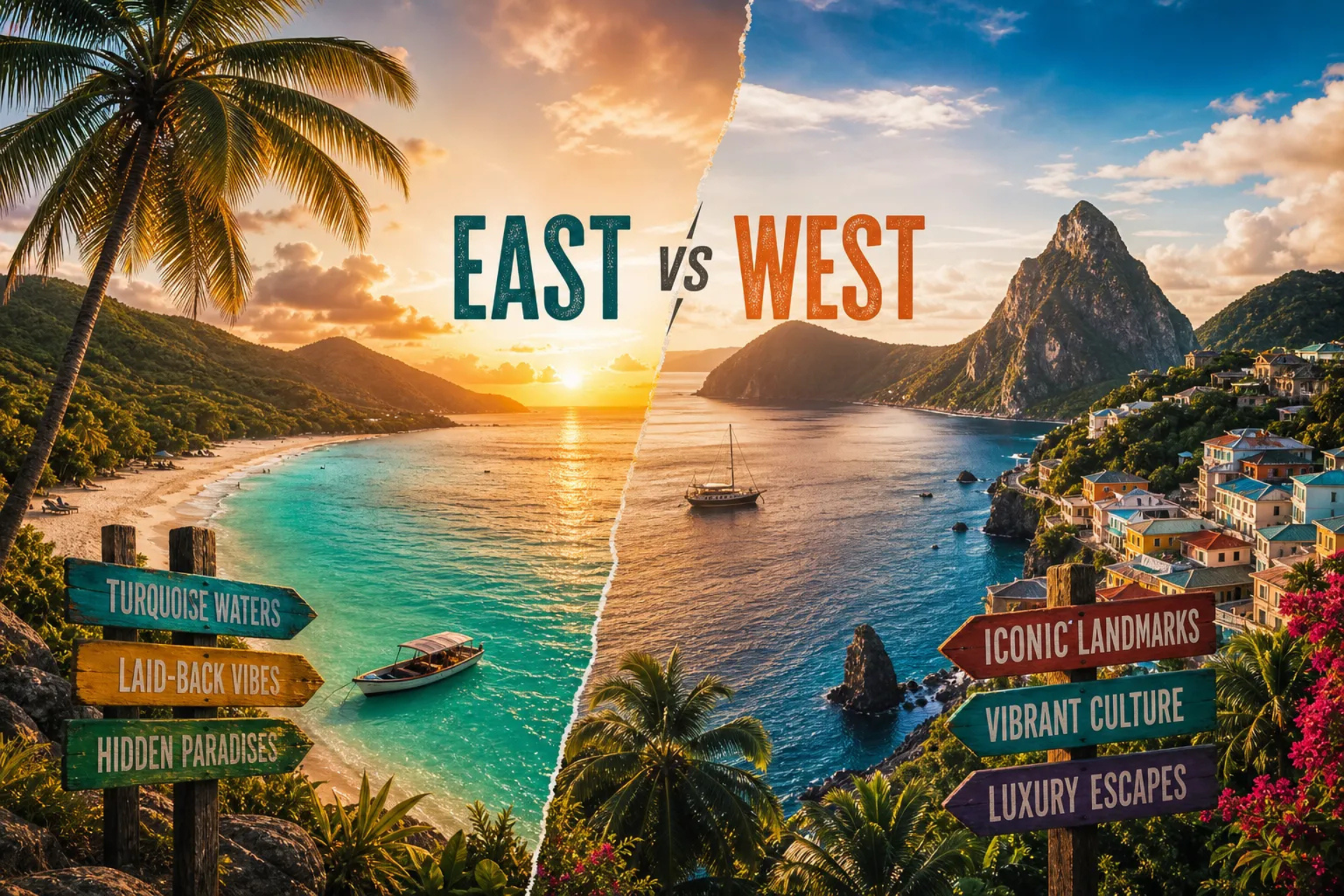
Eastern vs Western Caribbean Regions: The Ultimate Guide
Here is a thought that changes the way experienced cruise travellers think about the Caribbean regions: every island is drenched in the same turquoise sea, but no two regions actually deliver the same holiday. The brochures all promise white sand, warm water, and rum punch. What they rarely explain is that a cruise through the Eastern Caribbean and a cruise through the Western Caribbean are, in almost every meaningful sense, different journeys through different worlds, and that difference begins long before you board the ship.
At Skylord Cruise and Holidays, this is the first conversation we have with every new client who rings us about a Caribbean cruise. Before we discuss ships or sailing dates or cabin grades, we ask one question: which region? Choosing the wrong one means spending a week in ports that don't match your interests, your pace, or the kind of memories you're actually trying to make. This guide lays out the three-region framework, Eastern, Western, and Southern, and gives you the tools to choose the one that fits you best.
Why Caribbean regions matter more than you think for cruise planning
Cruise lines don't organise their Caribbean itineraries randomly. They structure sailings by region, and that structure determines everything: which ports you visit, how long you sail between stops, what kind of landscape you wake up to each morning, and what you do when you go ashore. An Eastern Caribbean sailing and a Western Caribbean sailing might depart from the same Florida port on the same week, but they share almost no ports of call and attract quite different kinds of travellers. Understanding the regions of the Caribbean before you book is the single most useful piece of planning you can do.
How cruise lines define Eastern, Western, and Southern routes
Cruise lines departing from Florida, Southampton, or the Caribbean itself group their sailings into three broad regional categories (a practice similar to international regional groupings such as the UN regional groups). Each typically forms a 7 to 14-night itinerary, and the ports within each region rarely overlap. You won't find Barbados and Cozumel on the same standard sailing: they belong to entirely different Caribbean worlds, part of what makes each region genuinely worth understanding on its own terms.
The geography behind the groupings (made simple)
The Eastern Caribbean follows the arc of the Lesser Antilles, the long chain of smaller islands sweeping south-east from Puerto Rico toward Venezuela. The Western Caribbean is anchored by the Greater Antilles, the larger landmasses including Jamaica and Cuba, plus the Central American coastline of Mexico, Belize, and Honduras. The Southern Caribbean curves further still, toward the ABC islands of Aruba, Curaçao, and Bonaire, sitting just off the Venezuelan coast. That's why Jamaica and Barbados, both definitively part of the West Indies, belong to completely separate itineraries despite being marketed as the same destination.
The Eastern Caribbean: culture, coral, and colonial history
The Eastern Caribbean follows the Lesser Antilles island chain and holds a particular resonance for British travellers. Barbados, St Lucia, Antigua and Barbuda, St Maarten, the US Virgin Islands, Martinique, Guadeloupe, and Dominica all sit within this arc. The region carries strong British and French colonial heritage, and English is the working language across most of these islands. For a traveller from the UK, this is familiar ground, culturally, linguistically, and historically, presented within an entirely unfamiliar landscape. If you want to explore curated itineraries that centre on Mexico and Dominican Republic, consider our Barbados Cancun & Dominican Republic Twin Centre option.
Top Eastern Caribbean ports and what they offer
Bridgetown, Barbados, is the most visited Caribbean destination for British tourists, and with good reason: it's a UNESCO-listed city with Georgian architecture, rum distilleries, and a coastal culture unmistakably shaped by its British past. St Lucia offers something entirely different, dramatic volcanic Pitons rising from the rainforest, world-class snorkelling at Anse Chastanet, and a Creole food scene that will outlast the holiday in your memory. Antigua is famous for its 365 beaches (one for every day of the year, as locals reliably note) and the beautifully preserved English Harbour. For sample itineraries that pair these islands, see our Barbados & Saint Lucia All Inclusive Caribbean Island Hopping.
St Maarten, half Dutch and half French, is one of the Caribbean's genuine oddities. In a single morning ashore, you can cross between two countries, two languages, and two culinary traditions, a peculiarity that has no real equivalent elsewhere in the region.
Climate and best conditions in the Eastern Caribbean
Trade winds keep temperatures moderate, typically between 24 and 30°C, and give the Eastern Caribbean its breezy, comfortable sailing character. The Windward Islands, including St Lucia, Grenada, and Dominica, are greener and more dramatic precisely because they catch more rainfall from the Atlantic. The Leeward Islands, Antigua, St Maarten, and Anguilla among them, are drier, sunnier, and flatter. Both groups benefit from more settled sailing conditions than the Western region, and the peak season from December through April offers some of the finest cruising weather in the world. For more detailed regional climate information, see this overview of Caribbean climatology.
Who the Eastern Caribbean suits best
The Eastern Caribbean is the natural starting point for first-time Caribbean cruisers from the UK, and not simply because English is widely spoken. The cultural echoes of the region's British and French colonial past make the islands feel approachable without ever feeling predictable. Beach lovers will find extraordinary variety within a single itinerary, from the flat, white-sand calm of Antigua's bays to the wilder Atlantic-facing shores of Barbados. Foodies, meanwhile, often discover that the Eastern Caribbean's Creole and French-influenced cuisine is one of the most underrated aspects of the entire journey.
The Western Caribbean: ancient ruins, adventure, and warm, still waters
The Western Caribbean is a fundamentally different proposition. Built around the Greater Antilles and the Central American coastline, it trades the Eastern region's colonial charm for something older and wilder. The sea here is calmer and warmer, less wind-swept, which makes it ideal for diving and water sports. But the real distinction is what waits inland: ancient Maya civilisations, barrier reefs, cloud forest, and some of the most biologically rich jungle on Earth.
Top Western Caribbean ports and standout experiences
Cozumel sits above the Mesoamerican Barrier Reef, the second largest coral reef system in the world, and serves as the gateway to Tulum and Chichen Itza for travellers with an appetite for archaeology. Grand Cayman offers Seven Mile Beach and Stingray City, where you wade into warm shallows to meet stingrays that have been greeting visitors for decades. Jamaica, whether you dock at Falmouth or Ocho Rios, delivers Dunn's River Falls, Blue Mountains coffee, and a cultural energy unlike anywhere else in the region. Belize City is the launchpad for cave tubing through ancient Mayan ceremonial systems and diving along a barrier reef of exceptional biodiversity.
Climate and sea conditions in the Western Caribbean
The Western Caribbean runs warmer and more humid than the Eastern region, with sea temperatures reaching 29 to 30°C and considerably less wind. This is paradise for snorkellers and divers but can feel intense during summer months for travellers sensitive to heat. The Western region also sits more squarely in the path of Atlantic hurricanes during the June to November season, meaning itineraries during this window carry more weather risk than their Eastern Caribbean equivalents.
Who the Western Caribbean suits best
If the Eastern Caribbean is for those who want variety within a familiar frame, the Western Caribbean is for those who want to step beyond the island altogether and into a continent. Adventure travellers and history enthusiasts will find the Maya sites alone worth the journey. Divers and snorkellers gain access to some of the most serious reef systems in the Western Hemisphere. Families benefit from the combination of straightforward beach days and genuinely remarkable inland excursions. The Western Caribbean rewards curiosity, and the willingness to venture away from the ship.
The Southern Caribbean: the region most British cruisers haven't discovered yet
The Southern Caribbean is the most overlooked of the three regions and, arguably, the most rewarding for experienced cruisers who feel they've exhausted the standard itineraries. Stretching from Grenada through Trinidad and Tobago and down to the Dutch ABC islands of Aruba, Curaçao, and Bonaire, this region sits below the main hurricane belt. That geographic position has a practical consequence most travellers don't initially appreciate: it makes the Southern Caribbean one of the few parts of the West Indies where year-round cruising is genuinely viable without elevated weather risk.
What makes the ABC islands unlike anywhere else in the Caribbean
Aruba, Curaçao, and Bonaire offer a distinctly Dutch-meets-Caribbean character that has no real equivalent elsewhere in the region. Curaçao's capital Willemstad is a UNESCO World Heritage Site, its coloured Dutch colonial townhouses reflected in the harbour water. Bonaire is one of the world's premier shore-diving destinations, with a protected marine park that rings the entire island. These aren't beach-and-cocktail islands. They are destinations for travellers who want something genuinely different, ports that prompt questions rather than simply confirming expectations.
Trinidad and Tobago: the most culturally distinct stop in the Caribbean
Trinidad is the birthplace of steelpan music and one of the most cosmopolitan islands in the entire region, shaped by African, Indian, Chinese, and European cultural heritage across centuries of complex history. It is less about beaches and more about food, festival, and lived culture at its most vivid. Tobago, its quieter sister island, offers the opposite: pristine nature, protected coral reefs, and some of the least crowded beaches in the Caribbean. For travellers intrigued by the region's musical heritage, our Caribbean & Music Capitals Escape, Cruise & Rail Package pairs cultural immersion with seaside relaxation.
Who the Southern Caribbean suits best
The Southern Caribbean has earned a quiet but devoted following among experienced cruisers, the kind who have done the Eastern and Western itineraries more than once and are looking for something that resets their sense of what a Caribbean holiday can be. Serious divers rank Bonaire among the finest shore-diving locations on the planet. Nature lovers find Trinidad and Tobago's ecosystems unlike anything available further north. And travellers who prioritise genuine cultural immersion, rather than a curated version of it, will find the Southern Caribbean consistently delivers. The added benefit of year-round sailing without monitoring a hurricane tracker makes it a practical choice as well as an inspired one.
Which Caribbean regions do British travellers book most, and when to go
British travellers have historically gravitated toward the Eastern Caribbean, and our own booking patterns at Skylord Cruise and Holidays reflect it clearly. Barbados receives the highest share of UK visitors of any Caribbean island, followed by St Lucia, Antigua, and Jamaica. The cultural familiarity of former British territories, the widespread use of English, and the relatively straightforward Atlantic crossing all make the Eastern Caribbean the natural starting point for UK cruisers on their first Caribbean sailing. For a concise overview of the countries and territories that make up the region, see this list of Caribbean countries.
Hurricane season and what it actually means for cruise planning
The Atlantic hurricane season officially runs from 1 June through 30 November, peaking in mid-August and September. The Eastern and Western Caribbean carry meaningful weather risk during this window, and cruise lines do reroute or adjust itineraries in response to developing storms. The Southern Caribbean, particularly the ABC islands, sits outside the main hurricane track and remains a reliable year-round option. For a helpful visual guide to how the season typically unfolds, consult this hurricane season timeline. For travellers with flexibility, December through April is peak season across all three regions: drier, calmer, and offering the finest conditions the Caribbean can produce.
Best times to visit each Caribbean region from the UK
- Eastern Caribbean: December to April, when the trade winds are at their best and rainfall is minimal
- Western Caribbean: December to April for optimal conditions; summer sailings operate but carry elevated weather risk
- Southern Caribbean: Year-round, with November to May offering the most settled sailing conditions
How to choose the right Caribbean region for your cruise
After reading this far, you have the framework. Now the task is applying it honestly to your own travel personality, your travel window, and what you actually want to feel at the end of a fortnight at sea. The mistake most first-time Caribbean cruisers make is choosing a ship or a price before they've chosen a region. The region should come first, every time.
A simple framework to match your personality to a region
If you're drawn to beach variety, cultural familiarity, colonial history, and the comfort of English-speaking ports, the Eastern Caribbean is your natural starting point. If you want adventure, archaeology, jungle, and diving on serious reef systems, look at the Western Caribbean. If you've done both and want something that will shift your sense of what the Caribbean can actually be, the Southern Caribbean is where that conversation begins.
Why tailored Caribbean cruise planning matters more than people realise
Generic booking platforms can't account for the nuances: which ports a ship actually docks at versus which require a tender, how shore excursions vary by region and season, or which sailing window aligns with UK school holidays. A specialist who knows these itineraries intimately makes the difference between a good holiday and a genuinely memorable one. At Skylord Cruise and Holidays, we've built our Caribbean cruise planning service specifically around the needs of British travellers, matching the right Caribbean regions to the right ship, the right sailing dates, and the realities of actual lives rather than ideal ones.
The Caribbean is three destinations, not one
The opening paradox holds: the Caribbean is marketed as a single destination but experienced as three distinct worlds. Each of these Caribbean regions has its own personality, its own climate rhythm, and its own type of traveller it rewards most. The Eastern Caribbean offers the most culturally familiar ground for British cruisers. The Western opens the door to ancient civilisations and jungle adventure that no beach day can replicate. The Southern rewards those willing to go beyond the brochure, and experienced cruisers return to it, quietly and repeatedly, without telling too many people about it.
The most important step is not choosing an island. It is choosing the right Caribbean region first, before the ship, before the price, and before the sailing date. That single decision shapes everything that follows. If you're ready to start planning, the team at Skylord Cruise and Holidays is ready to help you find your Caribbean.