10 Reasons to Visit Bora Bora in French Polynesia
10 Reasons to Visit Bora Bora in French Polynesia

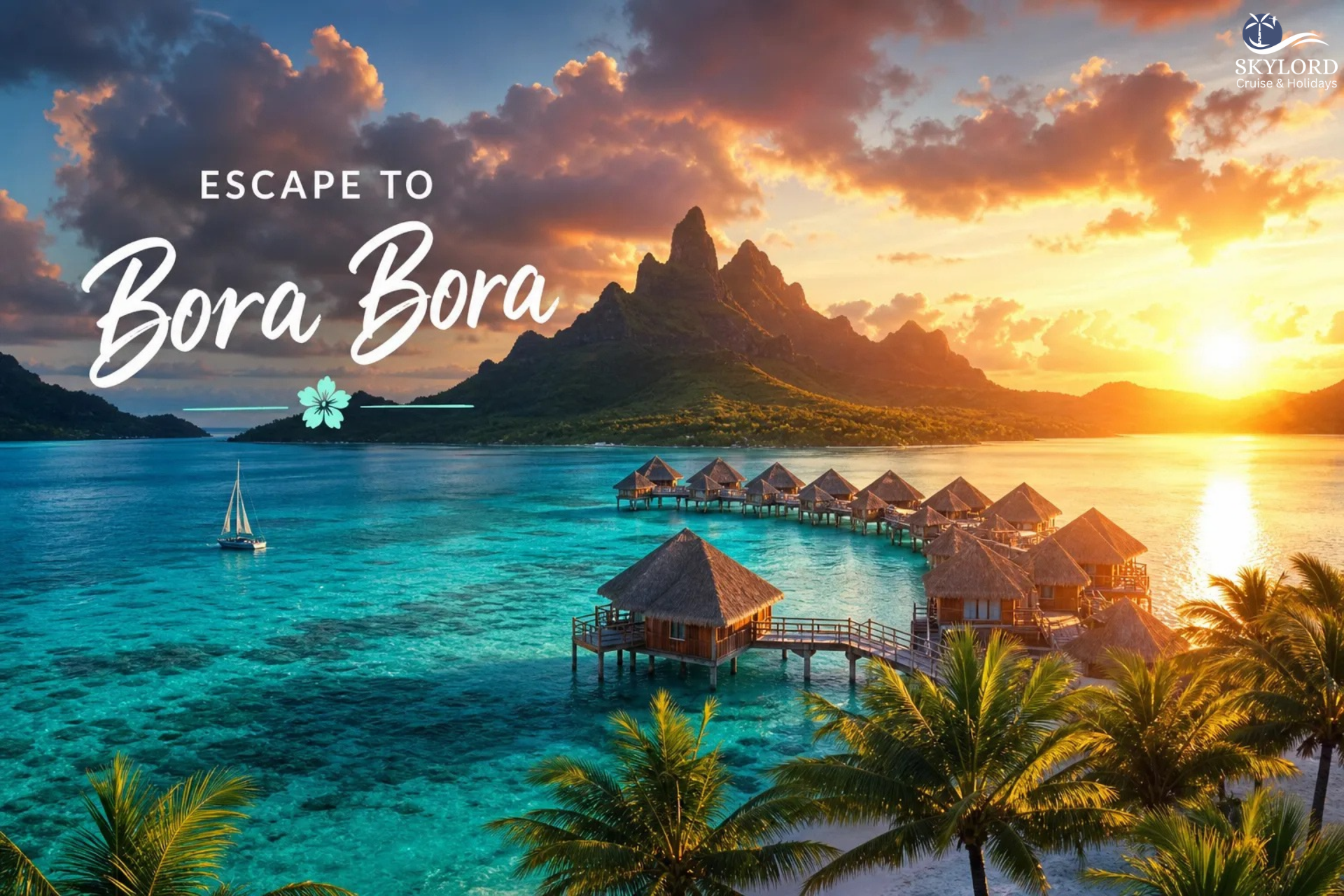
There is a peculiar thing that happens when travellers finally arrive in Bora Bora, French Polynesia's most celebrated island. They have seen the photographs. Everyone has seen the photographs. The turquoise lagoon, the overwater bungalows perched on stilts, the dark volcanic peak rising above the mist at dawn. And yet, almost without exception, people step off the boat transfer and feel genuinely stunned. The photographs haven't lied. They have simply failed to capture the scale, the silence, and the particular quality of light that bounces off water shallow enough to read a book through, a sensation many visitors describe as one of travel's great surprises.
French Polynesia's crown jewel is not simply a beautiful island. It is, for many travellers, the standard against which every other island destination is quietly measured. At Skylord Cruise and Holidays, Bora Bora regularly features at the very top of South Pacific wish lists when British travellers come to us ready to plan their trip. What follows is a structured case for why it belongs on yours, paired with the practical knowledge you need to plan the trip properly.
The lagoon and the landscape that made Bora Bora famous
The colour of the water and what causes it
Bora Bora's lagoon is not uniformly blue. It shifts from deep sapphire at the reef edge to a pale, almost luminous green in the shallows, and it does so because of the island's unique geography. A barrier reef encircles the main island and its surrounding motus (small coral islets), creating a naturally enclosed, shallow lagoon with exceptional visibility and calm, protected waters. The result is essentially a vast natural swimming pool, and the colours it produces are not a photographer's trick. They are a product of depth, coral, and reflected sunlight working together in an unusually transparent body of water.
This is the reason that lagoon tours here feel unlike any other snorkelling experience in the Pacific. On many tours, the water is clear enough that you can spot blacktip reef sharks from the boat well before you enter the water.
Mount Otemanu and the drama of a volcanic interior
Bora Bora is not a flat atoll. At its centre stands Mount Otemanu, an extinct volcanic peak whose ridged silhouette is visible from almost every point on the island and from the lagoon beyond. It is this vertical drama that separates the island from the many beautiful but comparatively featureless reef islands of the Pacific. When you look out from an overwater bungalow deck and see both the lagoon and the mountain framed in the same view, you understand why this destination commands premium prices and a near-mythological reputation.
Bora Bora hotels in French Polynesia: from overwater bungalows to smart-value resorts
The overwater bungalow experience: what it's actually like
Staying in an overwater bungalow is one of those travel experiences that sounds like a cliché until you are actually sitting on your private deck, watching parrotfish through the glass panel beneath the villa. The better resorts offer direct lagoon access by ladder, deep silence broken only by water, and views that no room category on land can replicate. The Four Seasons Bora Bora and the St Regis Bora Bora are consistently well-reviewed for their overwater villas; published starting prices at the time of writing range from approximately £1,100 to £2,300 per night depending on villa category and season, though rates should be confirmed directly with each property. Both sit on private motus, which means the boat transfer from the main island pier is itself part of the arrival experience.
Mid-range and budget-friendly options without sacrificing the setting
Not every Bora Bora holiday requires a four-figure-per-night villa. The InterContinental Le Moana on the main island sits directly on Matira Beach and offers a genuine overwater option from around £580 per night (rates vary by season; confirm current pricing when booking), with the added advantage of being within walking distance of the village, local restaurants, and the island's food trucks. For travellers wanting the overwater bungalow experience at the most accessible price point available on the island, Maitai Polynesia Bora Bora starts from around £120 to £500 per night and is consistently well-reviewed by independent travellers for its price point. Bora Bora is aspirational, but it is not exclusively reserved for honeymoon splurges.
The activities and excursions that make the trip unforgettable
Full-day lagoon tours: sharks, rays, and coral gardens
If there is one non-negotiable booking on any Bora Bora itinerary, it is the full-day lagoon safari. A typical tour runs around six hours and covers snorkelling in coral gardens, swimming alongside blacktip reef sharks and stingrays in open water, and a lunch stop on one of the surrounding motus. Operators such as Lagoon Service and Moana Adventure Tours are among the most consistently recommended by travellers who have made the trip. Shared group tours start from approximately £140 per person; private charters begin closer to £850 for the group. The experience is not an organised zoo. The sharks and rays are wild, the water is open, and the encounter stays with you long after you return home.
4x4 island safaris and the history hiding in the hills
Most visitors stay on the water. The ones who venture inland discover a side of Bora Bora that rewrites their understanding of the island. The 4x4 safari route traces panoramic viewpoints, Polynesian cultural stops, and the remains of American WWII fortifications, a reminder that the US military used the island as a supply base from 1942. The volcanic interior looks nothing like the lagoon photographs. It is green, dramatic, and unexpectedly textured. This is usually a half-day excursion, which pairs naturally with a lagoon afternoon to give the most complete picture of what the island actually is beyond the postcard.
Sunset cruises, snorkelling spots, and water sports
Beyond the headline experiences, the secondary layer of Bora Bora activities is strong enough to fill several days without repetition. Sunset catamaran cruises are a well-used way to end a day. Jet ski circumnavigation tours give a sense of the lagoon's full scale in a couple of hours. For guests staying in overwater bungalows, the casual snorkelling accessible directly from the resort dock is genuinely impressive and does not require a dedicated tour booking to feel worthwhile. Two to three days of structured activities is usually sufficient to cover the highlights without over-scheduling a trip that fundamentally rewards stillness as much as adventure.
Bora Bora in French Polynesia: when to go and how to get there from the UK
The dry season, shoulder months, and what the wet season actually offers
The dry season runs from May to October, delivering the most reliable weather, calmer seas, and the best conditions for lagoon activities. July and August are the busiest and most expensive months, driven by European summer travel. May, September, and October offer the best compromise: generally settled weather, noticeably fewer crowds, and meaningfully better prices than the peak summer window. September in particular is close to July and August in sea quality while being quieter and cheaper. October grows wetter as the island transitions towards the humid season, but it remains a viable choice. The wet season from November to April is the cheapest window and suits budget-led travellers who can accept more frequent rain in exchange for lower accommodation rates.
Getting to Bora Bora from the UK: step by step
No international flights land directly in Bora Bora. The route from the UK involves a long-haul flight to Papeete's Faa'a International Airport (PPT) in Tahiti, typically with one stop via a hub such as San Francisco, Los Angeles, or Paris. Air France and French Bee are frequently used carriers for the Tahiti leg, with return fares from London currently ranging from approximately £1,100 to £1,500 depending on airline, season, and booking lead time, premium and business-class routings can push fares considerably higher. From Papeete, Air Tahiti or Air Moana operate domestic flights to Bora Bora's Motu Mute airport, a journey of roughly 50 minutes, with departures running throughout the day.
A short boat transfer then connects you to Vaitape or your resort's private motu. Building in at least one night in Papeete before your domestic connection is strongly recommended, both to absorb any long-haul delays and to begin the trip without immediately rushing a connection.
Island-hopping French Polynesia: Bora Bora, Moorea, and Tahiti
What Tahiti and Moorea add to a Bora Bora holiday
Tahiti is more than a transit stop. Papeete's morning market, the black sand beaches of the island's southern peninsula, and live Tahitian dance performances make it a genuine one-to-two-night destination in its own right. Moorea, a 30-minute ferry ride from Papeete or a 10-minute flight, adds something Bora Bora does not have: a wilder, greener interior, quieter beaches, and whale-watching opportunities between July and November. The combination of all three islands creates a natural travel triangle covering luxury, adventure, and cultural depth within a single South Pacific itinerary.
Crafting a multi-centre or cruise itinerary through the South Pacific
A practical multi-centre structure might run two nights in Tahiti, three in Moorea, and four to five in Bora Bora, connected by Air Tahiti's domestic network. For travellers wanting to move through the broader Society Islands at a slower pace, some cruise itineraries also operate through French Polynesia, combining sea days with port stops across the archipelago. This is precisely the kind of bespoke South Pacific itinerary that Skylord Cruise and Holidays builds for British travellers: a tailor-made multi-centre package or a cruise leg through French Polynesia, planned end to end, so the only decision you need to make on arrival is which side of the bungalow deck faces the mountain.
What a Bora Bora holiday actually costs: budgeting by tier
A realistic cost breakdown from budget to luxury
For a five-to-seven-day trip from the UK, total per-person costs generally fall into three distinct bands. A budget trip, using guesthouse accommodation, local roulotte meals, and shared tours, lands around £3,000 to £4,500 per person. A mid-range holiday with a decent resort bungalow and two or three guided excursions runs roughly £5,000 to £7,500. A luxury stay at an overwater villa with private excursions and resort dining starts from £10,000 per person and climbs considerably from there. Flights are the fixed foundation of every budget: economy fares currently average around £1,100 to £1,500 return from the UK, though premium routings and peak travel dates can push this towards £2,500, confirm fares at the time of booking.
Where to spend and where to save without losing the experience
The lagoon tour is not where to cut costs. It is the defining experience of any Bora Bora holiday, and a shared group tour at around £140 per person is already good value relative to what it delivers. Accommodation is where travellers have the most meaningful room to flex. One or two nights in an overwater bungalow paired with a guesthouse or mid-range hotel for the rest of the stay is a widely used strategy that preserves the headline experience without carrying its cost every night. Meals at local roulottes on the main island cost a fraction of resort restaurant prices and are authentically excellent. Planning this balance before you arrive, rather than improvising it on the spot, is what separates a trip that fully delivers from one that quietly strains the budget before the halfway point.
The only real question is when
Bora Bora has sustained its reputation across decades for good reason, and those reasons are concrete, not abstract. The lagoon is real. The overwater bungalows are real. The shark encounters, the volcanic silhouette at sunrise, the silence of a private motu at dusk, all of these are real, bookable experiences, not marketing mythology.
For British travellers, this corner of French Polynesia is genuinely achievable with the right timing, a clear budget framework, and an itinerary built around how you actually want to spend each day. If the multi-island South Pacific route appeals, combining Bora Bora with Moorea and Tahiti, or extending into a cruise leg through the Society Islands, the team at Skylord Cruise and Holidays can help you put it together. We specialise in exactly these kinds of tailored itineraries, from the first enquiry through to the boat transfer on arrival day.
The photographs are very good. The real thing is better. The only question worth asking now is when you go and find out for yourself.