
Portugal & the Azores: The Ultimate Multi-Centre Holiday Guide
Portugal & the Azores: The Ultimate Multi-Centre Holiday Guide

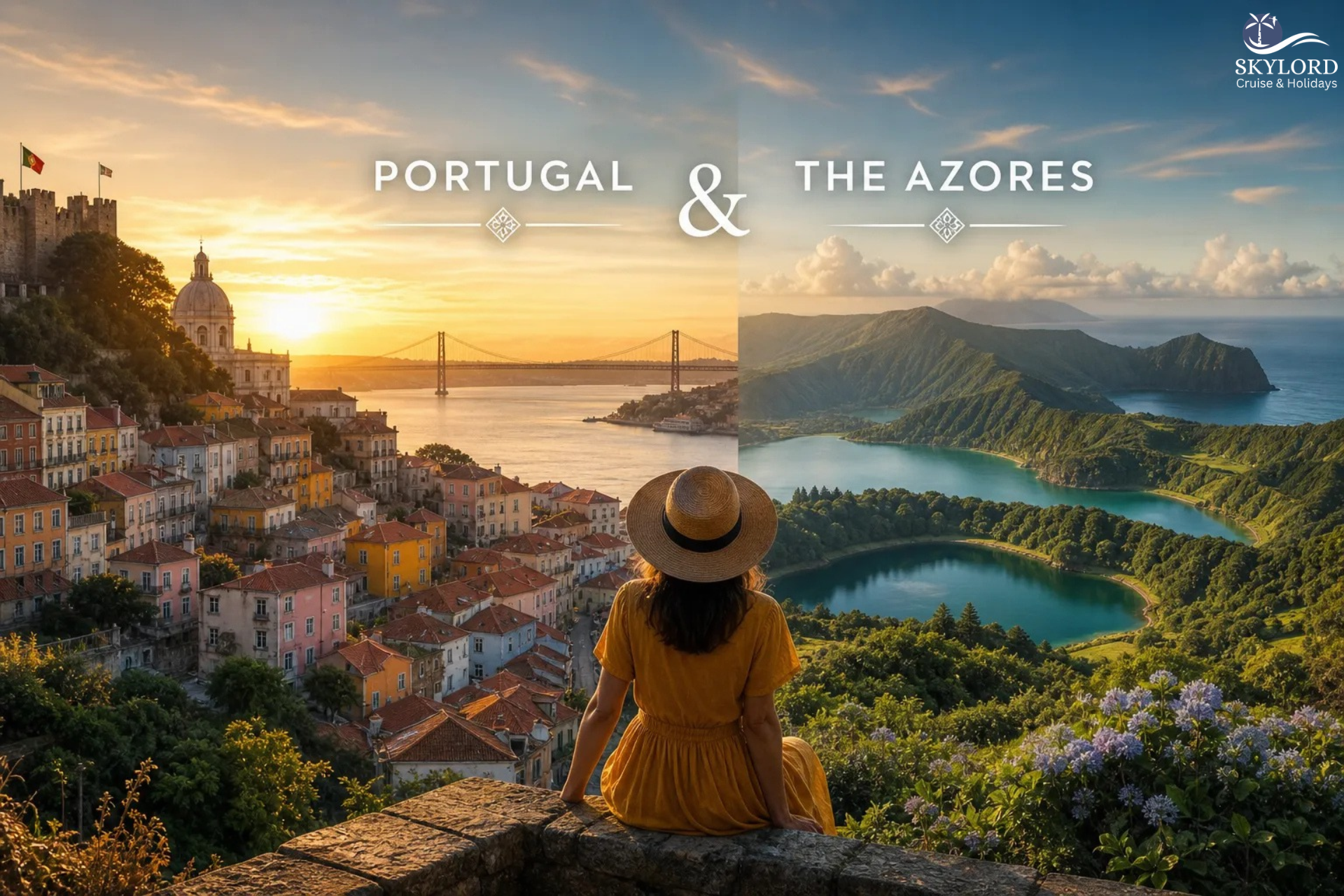
Portugal presents itself as a single destination, but it contains two entirely different worlds separated by roughly 1,500 kilometres of open Atlantic. For travellers considering Portugal and the Azores together, the contrast is striking from the moment you land on each side. One world is civilisation at its most layered: cobbled hills, golden azulejos, and centuries of explorers who charted oceans before the full map existed. The other is geology turned theatrical, where volcanic craters hold emerald lakes, hot springs bubble up through the earth, and landscapes carry the memory of eruptions that no human story preceded. Most travellers visit one and never reach the other, and that is the wrong decision.
The best holidays are built on contrast, not just scenery. Portugal and the Azores, taken together, deliver exactly that: the mainland grounds you in human history, and the archipelago reminds you that the planet has its own schedule entirely. It is a pairing that the team at Skylord Cruise and Holidays has championed for years, combining mainland stopovers with Azores island-hopping extensions into genuine multi-centre journeys rather than two trips reluctantly bolted together. What follows covers mainland highlights, the nine islands and where to begin, flight logistics, the best season, and ready-to-use itineraries for couples, families, and solo travellers who want to experience both worlds in one trip.
Why Portugal and the Azores belong on the same itinerary
Most travellers treat Portugal and the Azores as separate decisions, booked years apart if at all. But visiting one without the other is like reading the first act of a play and leaving before the transformation. The mainland gives you context: empire, culture, layered architecture, and the particular warmth of a country that spent centuries looking outward. The Azores give you perspective: raw volcanic nature that strips everything back and resizes your sense of scale. Taken together, they form a complete travel experience that neither half can quite deliver alone.
The practical payoff of this contrast is something that needs to be felt rather than described, but consider it this way. A traveller who spends four days absorbing Lisbon's accumulated history and then lands in Ponta Delgada experiences a genuine shift in scale, silence, and pace that no single destination can manufacture. This is not a logistics exercise, it is a deliberate design choice, and designing it well is the difference between a memorable holiday and an exhausting one. A well-structured multi-centre itinerary manages the connections, pacing, and accommodation transitions so the shift from cobblestones to crater lakes feels intentional rather than chaotic.
Mainland Portugal: what Lisbon and the Algarve offer in a week
Lisbon: where history walks beside you
Three to four days in Lisbon is the right amount for first-time visitors from the UK. The city rewards slow walking and curiosity over a checklist mentality: Alfama's medieval alleyways unfold differently at 8am than at noon, and the miradouros scattered across the hills offer the kind of views that stop a conversation mid-sentence. The standard priorities are Belém Tower, Jerónimos Monastery, the rattling Tram 28 through Mouraria, and the obligatory pilgrimage to Pastéis de Belém for a custard tart eaten standing on the pavement in the morning light.
Beyond the monuments, Lisbon functions best as an atmospheric city rather than a museum city. An evening in Alfama listening to fado in a small restaurant, a morning wandering Príncipe Real, a day trip to Sintra for palaces perched in forested hills: these experiences sit alongside the landmarks and arguably outlast them in memory. Four days gives you enough time to do the sights properly and still have one slow afternoon with no agenda.
The Algarve: more than just beaches
The Algarve is the natural geographical complement to Lisbon rather than a separate beach holiday tacked onto the end. Two to three days here rounds out the mainland leg before the Azores connection. The western Atlantic coast around Lagos and Sagres carries a distinctly different atmosphere to the calmer Ria Formosa in the east, and choosing between them depends on what you are after. Ponta da Piedade's sea-stack formations near Lagos are best explored by kayak or small boat, threading through sea arches and grottos at water level. Cabo de São Vicente, the south-western tip of continental Europe, has the particular atmosphere of a place where the known world once ended.
For families, the sea cave boat tours departing from Lagos are a practical highlight: two hours, outstanding coastal scenery, and a memorable introduction to the Algarve's geology that works for all ages. The Benagil sea cave, reachable by boat from both Lagos and Albufeira, has become one of the Algarve's most photographed sites, and justifiably so. Combine that with a dolphin-watching departure, and you have a full day on the water before the itinerary turns northward and then west toward the archipelago.
The Azores archipelago: nine islands and where to begin
São Miguel: the essential first island
São Miguel is the non-negotiable gateway island for any Portugal and the Azores itinerary. It is the largest, the most connected, and the one that delivers the widest range of the Azores' defining experiences within a compact area of around 65 kilometres. Sete Cidades is the centrepiece: twin lakes, one blue and one green, sitting in a collapsed volcanic crater and visible from the rim trail on a clear morning in a way that recalibrates your understanding of what a landscape can look like. Lagoa do Fogo sits further east, quieter and less visited, with a stillness that rewards an early start.
Furnas offers something genuinely unusual: hot springs that have been used for centuries, a village centred on thermal pools, and a geothermal cooking tradition where locals slow-cook stews underground using volcanic heat. The Gorreana tea plantation, the only working tea estate in Europe, sits on the island's north coast and offers the strange pleasure of drinking a cup of tea while looking out at the Atlantic from inside what is technically subtropical farmland. São Miguel is an island that makes you reconsider how much variety can exist within a single landmass.
Beyond São Miguel: the island-hopping tier
Faial and Pico form the classic pairing for island-hoppers. They sit close enough to connect by summer ferry, and they are dramatically different in character: Faial is a sailing hub centred on Horta Marina, with the Capelinhos Volcano on its western edge offering a landscape of ash and silence. Pico is dominated by Mount Pico, the highest mountain in Portugal, surrounded by UNESCO-listed volcanic vineyards and a whale-watching heritage that makes it one of the best islands in the archipelago for cetacean encounters. More than 20 species of whales and dolphins have been recorded in these waters.
Terceira earns its place on any serious Azores travel guide through Angra do Heroísmo, a UNESCO World Heritage city that most visitors have never heard of but genuinely deserves the designation. The Algar do Carvão lava cave on the same island is one of those experiences that reframes everything you thought you understood about what lies beneath your feet. Further west, Flores offers waterfalls and crater lakes for travellers willing to trade connectivity for genuine remoteness, and tiny Corvo, centred on a single caldera, is accessible only via Flores and exists almost entirely outside the tourist economy. The further west you travel through the Azores islands, the quieter it becomes, in every sense.
Portugal and the Azores: practical travel logistics
For British travellers, the standard route is to fly into Lisbon or Porto from any major UK airport, typical flight times from London are around two and a half hours, then pick up an onward connection to Ponta Delgada on São Miguel or, depending on your itinerary, directly to Terceira. From Manchester or Birmingham, flight times to Lisbon are broadly similar, at around two hours forty minutes. Seasonal direct services from London to the Azores operate in summer 2026, though connections via Lisbon remain the most flexible year-round option and make practical sense for anyone combining the mainland and the archipelago in a single trip. Azores Airlines operates the primary mainland-to-island service, with a high frequency of weekly flights between Portugal and the Azores during peak season.
Within the archipelago, SATA Air Açores connects all nine Azores islands, with Ponta Delgada serving as the main hub for inter-island departures. Corvo is accessible only via Flores. For the Faial, Pico combination, summer ferry services take approximately 30 minutes and add a dimension to the journey that a short flight cannot replicate: arriving at Horta by boat from Madalena with Mount Pico behind you is one of the more cinematic moments the archipelago offers. For timing, May to September is the core window for visiting Portugal and the Azores, with June and September offering the best balance of stable weather, accessible hiking trails, and strong whale-watching conditions without the compressed crowds of August peak season.
Itineraries that work in the real world
Seven days: the romantic escape for couples
Days 1 to 3 in Lisbon: slow mornings, Alfama evenings, and a day trip to Sintra. Day 4, fly to São Miguel and arrive in Ponta Delgada with enough time to walk the marina and eat well. Days 5 to 7 split between Sete Cidades, a Furnas thermal soak, and a sunset dinner on Faial's waterfront, looking toward the shadow of Mount Pico across the channel. This itinerary works because it never rushes, the contrast between Lisbon's layered streets and the Azores' volcanic quiet does the heavy lifting, and the pace lets both sink in properly.
Ten days: the family adventure
Three days in the Algarve open the trip with sea caves, beaches, and kayaking around Lagos's coast. One city day in Lisbon follows. Five days in the Azores then split between São Miguel and Terceira: São Miguel delivers the crater lakes, the geysers at Furnas, and a whale-watching departure that children remember for years. Terceira adds Angra do Heroísmo and the Algar do Carvão lava cave, which is the kind of experience that turns children into curious travellers rather than passive observers of scenery. School half-term and the six-week summer break align directly with the Azores' peak season, which makes the logistics straightforward.
Five days: the focused solo immersion
Base entirely in São Miguel, rent a car on arrival, and resist the impulse to rush. Day 1 is Ponta Delgada and recovery. Day 2 is the Sete Cidades rim hike. Day 3 is Furnas and the thermal pools. Day 4 is Lagoa do Fogo and the north coast road. Day 5 is whale watching or a slow morning before departure. The real argument for solo travel applies here directly: it works best when you stop treating it as an optimisation problem and start treating it as an exercise in being present in one place at a time.
Why a multi-centre trip like this needs a specialist
A mainland-plus-Azores itinerary involves more moving parts than a standard single-destination holiday, and it is worth being honest about that. Flight sequencing across three or four different legs, accommodation transitions that align with check-in logic rather than just geography, car hire arrangements that differ between the mainland and the islands, ferry timetables that change seasonally, and the fundamental question of how much time to give each leg: these decisions compound quickly. Most travellers underestimate this complexity until they are mid-trip with a missed ferry connection and no backup plan.
Skylord Cruise and Holidays builds these itineraries as a single joined-up journey rather than two separate bookings that happen to share a traveller. Flights, inter-island transfers, accommodation sequencing, and pacing are all handled, leaving you free to move between cobblestones and crater lakes without managing a spreadsheet. The result is the contrast the trip promises, experienced as it should be: without friction. Get in touch with the Skylord team directly to start planning your tailor-made Portugal and the Azores itinerary.
The case for planning this trip properly
Portugal and the Azores together offer something rare in modern travel: contrast within a single trip that is not manufactured but geological and historical in origin. The mainland anchors you in human story. The Azores situate that story within deep time, a reminder that the planet was here long before the first cobblestone was laid and will continue long after. Both halves are stronger for the company of the other, and a traveller who experiences both in one itinerary returns with something more than photographs.
The practical anchor points are straightforward. Choose São Miguel as your Azores base. Allow at least seven to ten days in total when combining both destinations. Travel between May and September for the best conditions, with June and September as the sweet spots. Select your island-hopping combination based on genuine interest rather than an impulse to cover all nine. And if you want the planning done well rather than just done, Skylord Cruise and Holidays is the right starting point, contact the team to begin designing your Portugal and the Azores journey.