How to Visit Mount Etna Sicily Safely & Memorably
How to Visit Mount Etna Sicily Safely & Memorably

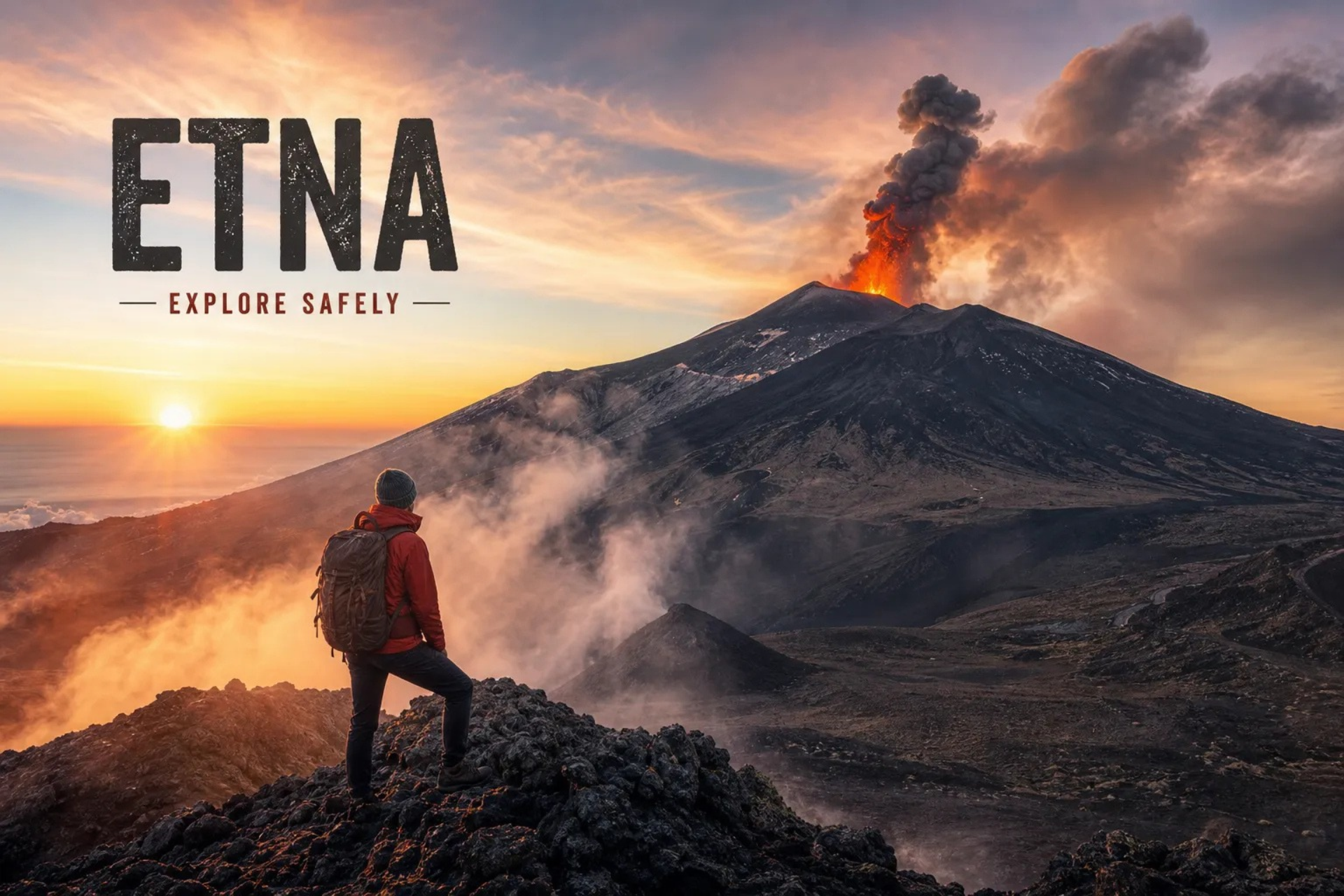
There is something quietly defiant about standing on one of Europe's most active volcanoes and watching the world below carry on completely indifferent to your presence. Mount Etna in Sicily doesn't loom over the island with menace so much as it hums beneath it, a slow, geological heartbeat reminding you that the planet was here long before we started booking flights and building itineraries around it. For UK travellers arriving into Catania, whether by plane or stepping ashore from a Mediterranean cruise calling at Sicily's ports, Etna is rarely just something to consider. It becomes the trip's defining moment, the photograph you can't explain to anyone who wasn't there. This Sicily Mount Etna guide covers current conditions, the right routes for your fitness level, transport from Catania, and everything you need to make the experience one you'll remember for the right reasons.
The honest tension is this: Etna is genuinely active right now, and that demands respect. But active doesn't mean inaccessible. Many hundreds of thousands of visitors experience the mountain every year, and the key to joining them safely is going informed.
Is it safe to visit Mount Etna in Sicily in 2026? The honest answer
Every traveller types this question first, and it deserves a direct answer rather than a hedge. Yes, visiting Etna is safe in 2026, provided you understand what the current conditions actually mean and adjust your plans accordingly. Safety here isn't a binary switch. It's a dial, and right now that dial is sitting at a level where tourism continues with appropriate care.
What the orange aviation alert actually means for visitors
The Italian National Institute of Geophysics and Volcanology, known as INGV, uses a colour-coded alert system to communicate Etna's activity: Yellow for minor activity, Orange for elevated or increasing volcanic behaviour, and Red for the most serious eruption phases. As of mid-September 2026, Etna carries an Orange aviation alert, with the current INGV notice stating that explosive activity is decreasing and weak ash emission is ongoing, but no ash cloud is currently being produced. The critical thing to understand is that aviation alerts primarily track risk to aircraft, not to hikers on the ground, separate civil-protection notices govern on-the-ground access. An Orange designation does not mean the mountain is closed or that your visit is inadvisable. It means the situation is being monitored, as it always is.
Catania airport did experience flight disruptions during a stronger eruptive phase in August 2026, when the alert briefly escalated to Red. That phase has since subsided, and the downgrade back to Orange reflects INGV's documented position: explosive activity is decreasing, with only weak ash emission ongoing. If the alert were to return to Red before your visit, summit access would almost certainly be suspended, which is a sensible reason to book tours with operators who offer clear rerouting or cancellation policies rather than rigid itineraries.
How activity has shifted through the year
Etna's 2026 behaviour follows a pattern that students of the volcano will recognise immediately. A Yellow alert in June marked a period of minor eruptive activity. By late summer, diffuse ash emissions pushed the designation to Orange. August brought the strongest phase of the year, triggering a temporary Red alert and the associated airport disruption. By mid-September, the return to Orange confirmed what Etna watchers have long understood: the mountain cycles through these phases, and between its more dramatic episodes it consistently welcomes visitors.
Current INGV notices report decreasing explosive activity and weak ash emissions, volcanic behaviour is inherently unpredictable, but nothing in the evidence points to an escalating pattern. This is a mountain doing what it has done for hundreds of thousands of years: breathing.
Getting to Sicily's Mount Etna from Catania: your realistic transport options
Etna's main south-side tourist hub at Rifugio Sapienza sits roughly 30 to 35 kilometres from Catania Airport, a journey of around 50 to 60 minutes depending on traffic. That proximity is one of the great logistical gifts of a Catania-based itinerary. You have three real options, each with a distinct set of trade-offs.
Hiring a car gives you the most flexibility. The route from the airport via the SP92 road is straightforward, and driving yourself means you can stop at viewpoints along the way, linger at Rifugio Sapienza, and fold in nearby towns like Zafferana Etnea on the way back. Before you set off, it is worth checking whether any road controls or temporary closures are in place near active areas, particularly if there has been recent volcanic activity. A quick review of INGV's latest notice and any local civil-protection updates takes five minutes and could save a wasted journey.
Organised transfers and guided day trips from Catania are the most stress-free option, especially for first-time visitors. Private transfers typically cost around €90 per vehicle for the 45-to-60-minute journey. Guided day tours bundle transport, expert commentary, and structured access into a single booking, which removes most of the planning burden and ensures you benefit from a guide's knowledge of current conditions on the mountain. For anyone visiting Mount Etna in Sicily for the first time, a guided tour is the smarter investment.
The AST bus from Catania city, not the airport, to Rifugio Sapienza runs once a day and does the job reliably. For budget-conscious solo travellers with time to spare, it's a viable choice. Allow 1.5 to 2 hours in total, including getting from the airport into the city. For most visitors, the efficiency of a transfer or tour makes more practical sense, but the bus option is worth knowing about if the budget is stretched.
Sicily Mount Etna: tours, treks, and what each one involves
The most useful mental model for Etna is this: the mountain has layers, and you don't have to reach the summit to have a profound visit. Each level offers something worthwhile, and the right choice depends on your fitness, available time, and appetite for challenge.
Easy access for first-timers and families
The Silvestri Craters trail near Rifugio Sapienza is the single best entry point for non-expert visitors. It's short, accessible, requires no guide, and delivers the kind of raw volcanic drama that photographs cannot fully capture. The cable car from Rifugio Sapienza ascends to around 2,500 metres, opening up views that stretch to the Ionian coast on clear days and justify the journey regardless of your fitness level. Half-day guided tours from Catania covering this area are approximately £55 to £65, departing in the morning and returning in time for an afternoon wandering Catania's baroque streets. This is also the format that works well for a shore excursion from a Catania port call, with most cruise ships spending eight to ten hours in port.
Moderate hikes for visitors who want to earn the view
For reasonably fit visitors who want something more immersive than a sightseeing tour, routes like the Sartorius Craters on the north side and Schiena dell'Asino on the south offer a step up in both challenge and reward. Schiena dell'Asino in particular is one of the mountain's finest panoramic hikes, with standout views over the Valle del Bove that rank among the finest in Sicily. No guide is legally required below the restricted altitude on these trails, but fast-changing weather demands genuine preparation. Conditions on Etna can shift within an hour, and the terrain is loose and uneven underfoot throughout.
Summit treks: what they involve and what they cost
Above roughly 2,700 to 2,800 metres, a licensed guide is compulsory. This is a legal requirement, not a suggestion, and it exists for good reason. Summit hiking tours to 3,400 metres typically run five to nine hours and cost from around £50 to upwards of £90, depending on inclusions such as the cable car, a 4x4 jeep transfer to higher altitude, and the specific tier of summit access. Book with an operator who has a transparent cancellation or rerouting policy. Summit access can be withdrawn at short notice if volcanic activity increases, and you want the flexibility to pivot to a lower-level route rather than lose the day entirely.
Safety rules and what to bring on the mountain
The legal position on access is worth understanding clearly before you set off. Below approximately 2,700 metres, most trails are open to independent hikers, and the cable car base areas and nearby towns remain accessible during most alert levels. Above that threshold, solo hiking near active vents is not permitted, and a licensed guide is mandatory. Before driving up, check INGV's latest notice and any updates from Catania's municipal or civil-protection authorities, particularly if there has been recent airport disruption due to ash. A Red alert would signal that summit access should be assumed suspended until you have confirmation otherwise.
What you carry matters on every level of visit, not just the summit. The non-negotiables are:
- Sturdy walking shoes or boots with a grippy, lugged sole. Volcanic terrain is loose, uneven, and unforgiving on flat trainers.
- Layers. Temperatures drop sharply above 2,000 metres even in high summer. Bring a fleece or mid-layer and a windproof outer shell as a minimum.
- A dust mask or buff for areas near crater vents, where sulphur dioxide concentrations can be noticeable.
- At least 1.5 litres of water, sun protection, and sunglasses. UV exposure at altitude is significantly higher than at sea level.
- A fully charged phone with GPS, and ideally a portable power bank for longer routes.
These apply to the Silvestri Craters trail just as much as the summit. Easy trails can become genuinely challenging when weather moves in, and Etna has a well-documented habit of keeping its own schedule.
Pairing your Etna visit with the best of Sicily
Etna is rarely the whole story. The mountain sits at the heart of a region that rewards slow, curious exploration, and the travellers who come away from Sicily with the richest experiences are invariably the ones who gave themselves enough time to let the island breathe around them.
Taormina is only 50 kilometres from Catania and belongs on any Etna itinerary without question. Its ancient Greek theatre, framed by the volcano on one side and the Ionian Sea on the other, is one of the most arresting scenes in all of southern Europe. Catania itself is worth a full day: the fish market at La Pescheria is a full-sensory experience before 9 in the morning, and the arancini from the street-food stalls near Via Etnea put every airport snack in its proper place. For visitors with additional days, the Baroque hill towns of Ragusa and Noto to the south offer an entirely different chapter of Sicilian history, sun-bleached and unhurried in equal measure.
For UK travellers who want to experience Sicily's Mount Etna without committing to a standalone Sicily trip, a Mediterranean cruise that includes Catania as a port of call solves the logistics elegantly. That is, in part, why we've built Sicily into several of our Mediterranean itineraries at Skylord Cruise and Holidays, combining it with other southern European stops into a single, seamlessly planned journey. An Etna excursion booked from a Catania port day, with ships typically spending eight to ten hours ashore, is one of the most efficient ways to make this experience part of a broader voyage without the complexity of planning it independently.
The volcano asks something of you, and it's worth giving
The paradox of Etna is that the volcano which feels formidable from a distance becomes strangely grounding when you're actually standing on it. The scale recalibrates something in how you see the rest of the trip. A visit to Mount Etna in Sicily asks for preparation, flexibility, and a degree of respect that most dramatic landscapes don't explicitly demand, and in return it offers a perspective on the living world that is difficult to replicate anywhere else.
Whether you walk the rim of the Silvestri Craters at dusk with the coast glittering below you, or push to the summit craters with a guide and a pair of boots that have earned their keep, you will leave understanding why this mountain holds UNESCO World Heritage status and why it draws visitors from across the world every single year. The key is going informed, going with the right support, and giving yourself enough time in Sicily to let the experience settle into something more than a photograph.
If you'd like to explore how a Mediterranean cruise itinerary or a tailor-made Sicily package could work around an Etna visit, get in touch with our team at Skylord Cruise and Holidays. We'll build the trip around the mountain, not the other way around.