
Why Lake Garda Should Be Your Next Multi-Centre Holiday Stop
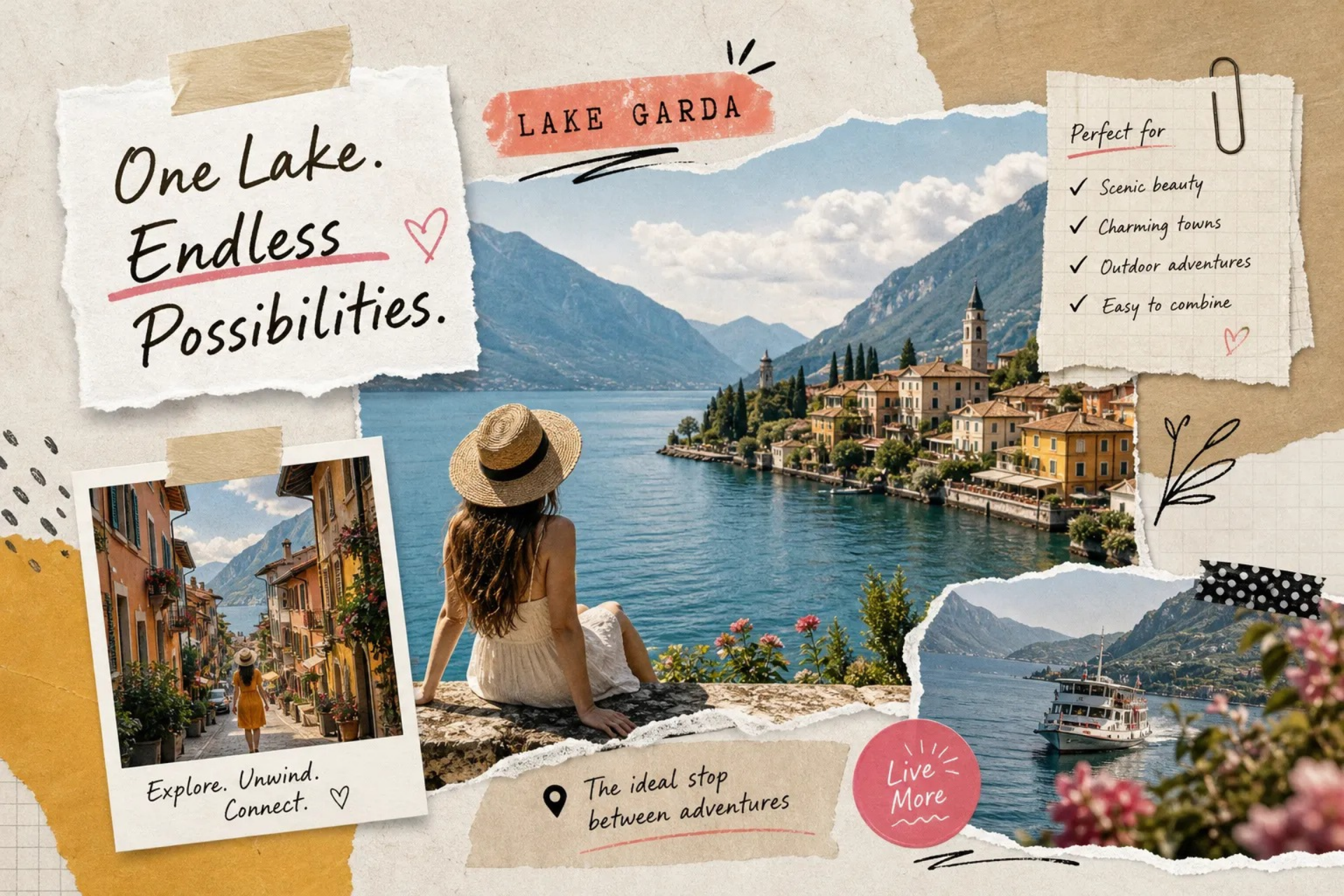
Why Lake Garda Should Be Your Next Multi-Centre Holiday Stop
Most UK travellers planning an Italian escape reach instinctively for the Amalfi Coast or a villa somewhere in Tuscany. Both are magnificent, and both are predictable. What they rarely consider is the north: a lake so large its size and position generate their own reliable winds and climatic effects, so varied it runs from Roman ruins and thermal spas at one end to alpine wind tunnels at the other. Lago di Garda, known to Germans as the Gardasee and to the rest of the world simply as Lake Garda, is the kind of place that rewards travellers who ask more of a destination than a sun lounger and a view.
What sets it apart as a holiday anchor is not any single attraction but its geography. Lake Garda stretches roughly 51 kilometres from its broad southern shore to its narrow northern reaches, placing it within comfortable reach of Verona and Venice to the east and the peaks of the Trentino to the north. Choose it as the centrepiece of your itinerary rather than a footnote, and you have the structure for one of the finest multi-centre holidays Italy offers. At Skylord Cruise and Holidays, we have been building exactly these kinds of multi-centre itineraries across Northern Italy for UK travellers who want the full picture, not just the postcard version.
The best Lake Garda base town for your travel style
Here is the planning mistake that catches most visitors out: they pick a town based on how the photos look rather than how the town functions. Lake Garda's settlements are not interchangeable. Where you base yourself determines the quality of your entire holiday, so it pays to choose deliberately rather than romantically.
A useful mental model is to think in terms of shores. The southern shore gives you transport, logistics and family convenience; the northern shore gives you altitude, adventure and the strong thermal winds for which the lake is internationally known. Everything in between falls somewhere on that spectrum.
Families and easy connections: the southern shore
Peschiera del Garda is the strongest family base on the lake. It is flat, walkable, positioned on the main train line, and surrounded by beaches, boat services and the Gardaland theme park. Desenzano del Garda offers a larger-town feel with more amenity variety, equally strong rail connections and a lively evening atmosphere. When travelling with children, transport access matters far more than lakefront romance. Both towns deliver on that front in a way the smaller villages simply cannot.
Couples and romantics: Sirmione and Malcesine
Sirmione sits on a narrow peninsula that juts into the southern lake like a pointed finger. Within walking distance of each other, you have the Scaligero Castle (open Tuesday to Sunday, adult admission €10), the Roman ruins of the Grottoes of Catullus, and thermal spa facilities that have been drawing visitors since antiquity. Malcesine, on the eastern shore, pairs medieval lanes and a hilltop castle with the Monte Baldo cable car. Sirmione suits couples who want history and indulgence; Malcesine suits those who want scenery and the mountains to be genuinely within reach.
Solo travellers, watersports lovers and the northern lake
Riva del Garda earns its reputation as the lake's most sociable and activity-rich base. It is easy to navigate on foot, well connected by ferry, and built around hiking, cycling, climbing and open-water swimming. Torbole, its immediate neighbour, is the undisputed watersports capital: the thermal winds that funnel down from the Alps create conditions that international windsurfing and sailing circuits use as a benchmark. Reaching the northern shore from the UK requires slightly more transfer planning than flying into Verona and heading south, but the landscape and atmosphere justify the extra effort.
Top things to do at Lake Garda: on the water, in the hills and beyond
The appeal of Lake Garda is density. Within a geography you can traverse from end to end in a relatively short drive, you can windsurf, hike to over 1,700 metres, visit Roman ruins, explore the monumental estate of an influential and controversial early-20th-century literary figure, and taste wines from three different DOC appellations, Bardolino, Lugana and Soave among them. The trick is to pick a lane rather than attempt everything.
Out on the water: sailing, windsurfing and lake cruises
Torbole and Riva receive the kind of consistent thermal winds that make them international windsurfing destinations. Complete beginners can book structured lessons at schools such as Duotone Pro Center Torbole, which requires no prior watersports experience, only the ability to swim. Sailing Du Lac in Riva offers windsurfing introductions from €59 for three hours, making it an accessible starting point. For those who prefer watching the lake from a sun deck, the passenger ferry network connects Sirmione, Garda, Malcesine, Limone and Riva in a slow, scenic arc that is a travel experience in its own right, particularly on a clear autumn afternoon.
Sirmione, Bardolino and the lakeside towns worth your time
Beyond Sirmione's Roman and medieval highlights, Bardolino on the eastern shore deserves a proper afternoon. It sits at the heart of the Bardolino DOC wine trail, and the Lugana whites produced along the southern shore are among Italy's most underrated wine styles. A half-day visit to Cantina Zeni 1870 or Guerrieri Rizzardi covers the classic Bardolino Classico alongside comparisons with Valpolicella and Soave from the broader Veneto region. On the western shore, the Vittoriale degli Italiani in Gardone Riviera is genuinely strange and worth an afternoon: the estate of Gabriele D'Annunzio, an influential and controversial early-20th-century literary and political figure, it is part outdoor museum, part monument to obsessive personality, and entirely unlike anything else on the lake.
Into the mountains: Monte Baldo and beyond
The Monte Baldo cable car rises from Malcesine to over 1,700 metres in a rotating gondola that gives every passenger a full panoramic view. The 2026 season runs from 4 April to 1 November, with adult return tickets at €30 (or €28 booked online). At the summit, hiking trails range from gentle ridge walks to more demanding routes, and paragliding launches operate when conditions allow. Serious hikers and active travellers based in Riva del Garda are also within day-trip range of the Trentino Dolomites, where the scenery shifts from the familiar Italian lake to something altogether more dramatic.
Wine tasting in the Veneto: why this region rewards the curious
September and October transform the eastern shore into working wine country. The hills behind Bardolino and Garda produce Soave and Valpolicella alongside the local DOC wines, and estates such as Zenato in Peschiera or the family-run Cantina Valetti near Bardolino offer guided cellar and vineyard visits with tastings and local food pairings. Most require advance reservation, particularly the smaller producers. Weaving a half-day vineyard visit into a Lake Garda itinerary adds almost no extra travel: the vineyards sit minutes from the lakeside, yet the experience feels entirely separate from it.
When to visit Lake Garda and how to get there from the UK
The honest answer is that shoulder season is the most rewarding time to be here. April to May and September to October deliver mild temperatures, manageable crowds and noticeably lower prices than the summer peak. July and August bring the warmest water, the fullest ferry timetables, Verona's outdoor opera season, and real congestion: book months ahead if you choose this window, particularly for lakefront apartments and the larger campsites.
Winter is quiet in a way that suits a very specific kind of traveller: thermal spa breaks in Sirmione, Christmas markets in Riva and Arco, and occasional skiing on Monte Baldo. Many seasonal hotels and some attractions close or operate reduced hours, so winter visits require more planning than the summer equivalent.
Getting there from the UK
Lake Garda has no airport of its own. Verona Villafranca (VRN) is the closest and most convenient gateway for the southern and eastern shores, with UK flights from London, Manchester, Leeds Bradford and East Midlands. From Verona Airport, a pre-booked transfer reaches Peschiera in around 25 minutes; alternatively, the airport shuttle to Verona Porta Nuova connects to regional trains for Peschiera and Desenzano. Brescia and Bergamo are useful alternatives for the western shore. Milan and Venice offer more flight options but add meaningful transfer time, particularly to the northern lake.
Moving around the lake once you arrive
The passenger ferry network is the most atmospheric way to travel between towns and runs most frequently between June and September. The main southern rail stops, Peschiera and Desenzano, anchor bus connections to the eastern shore; for the northern lake, Rovereto connects by bus to Riva del Garda and Torbole. A hire car gives the most flexibility on the western and northern shores, though the roads in July and August can test that patience considerably.
Beaches worth building your day around
One fact that surprises many first-time visitors: most Lake Garda beaches are pebbly or gravelly rather than sandy. Water shoes are worth packing. The southern shore offers warmer water, gentler shallows and better facilities than the north, which matters considerably when travelling with younger children or less confident swimmers.
Baia delle Sirene near Garda town and Lido di Lugana near Sirmione are the strongest all-round family choices: both offer managed grounds, café facilities, toilets and shallow swimming areas. Spiaggia Bergamini at Peschiera suits families with young children particularly well. For the north, Spiaggia Sabbioni in Riva del Garda is the most accessible and well-equipped option, with a broad lakeside park and easy access to the town centre. Visitors with mobility needs should check current lake-entry equipment and accessible facilities directly with each beach before travelling, since "easy access" often refers to reaching the shoreline rather than entering the water.
Pairing Lake Garda with Verona and Venice for a full Italian escape
Here is where the multi-centre argument becomes genuinely compelling. Lake Garda's position in Northern Italy places it within easy reach of two of the country's most significant cities. Most visitors pick one; those who come home with that particular look of satisfaction tend to choose two or three.
Verona is 30 minutes by regional train from Peschiera del Garda. It contains the Roman Arena, Shakespeare's setting for Romeo and Juliet, and one of Italy's great medieval city centres. In summer, the Arena's outdoor opera season runs alongside your lake evenings, which is precisely the kind of combination that transforms a good holiday into a remarkable one. A two-night Verona stop adds real depth without adding real complexity, and return train fares from Peschiera typically run to around €36 to €44.
Venice sits roughly 150 kilometres east of the lake, about one hour and 25 minutes by direct train from Peschiera. Return fares vary depending on how far in advance you book, but are broadly comparable to the Verona route. A three-centre itinerary combining Lake Garda and Venice covers Italian lake scenery, Renaissance architecture, canal city atmosphere and mountain landscape within a single trip. That is fundamentally different from spending seven nights in one resort; it is the itinerary you find yourself describing to people who ask why you look so pleased with yourself.
Three destinations, multiple hotel check-ins, ferry timetables and train connections across a ten-day trip represent a genuine logistical challenge for independent travellers. This is precisely the kind of bespoke multi-centre package the team at Skylord Cruise and Holidays builds for UK clients: curating each stop, managing the connections, and ensuring the itinerary flows rather than fragments. Get in touch with our team to talk through your Lake Garda plans, and we can build the structure around your travel dates, budget and interests.
The lake that changes the quality of your whole trip
Lake Garda rewards those who resist the obvious. The shore you choose shapes the entire experience: the south delivers family ease and rail convenience, the north offers altitude, drama and some of Europe's finest conditions for watersports. Visit in shoulder season if your schedule allows, and pair it with Verona at minimum, Venice if you can manage it. These are not complicated decisions, but they are the ones that separate a pleasant Italian holiday from one you talk about for years afterwards.
The most memorable Italian holidays are rarely the ones that stayed in one place. Whether your version of that looks like windsurfing at Torbole in the morning and opera in Verona that evening, or a spa afternoon in Sirmione followed by a wine tasting in the Bardolino hills, the lake absorbs every version of that plan. It just needs you to arrive with one.